

How virtual 3D spaces can intensify harm – and what must change
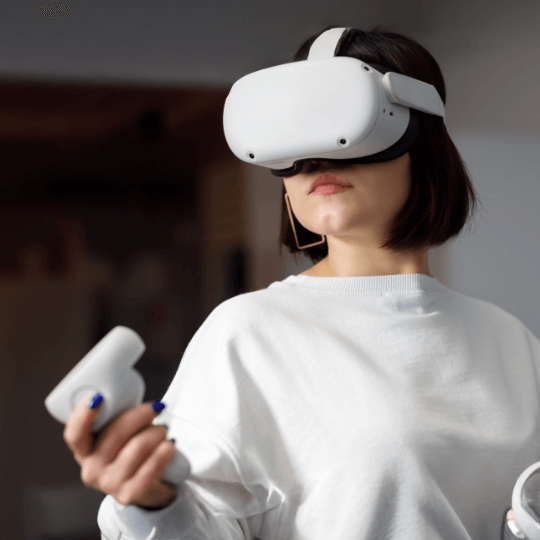
This edition of the Tech trends converge series looks at immersive technologies and how extended reality (XR) can amplify existing gender-based harms online – and what must change.
It builds on eSafety’s position statement on immersive technologies.
On this page:
- How virtual 3D spaces can intensify harm – and what must change
- What we mean by immersive technologies
- Understanding gender-based violence in immersive spaces
- 'It feels real’: Why immersive harms are different
- Moderation is more challenging in this space – and must evolve
- Safety by Design – proactive, not reactive
- Shifting the burden and trauma-informed approaches
- Designing safer and more inclusive digital worlds
- Resources
- Notes and references
This page was first published in November 2025.
How virtual 3D spaces can intensify harm – and what must change
Immersive technologies make experiences feel embodied, visceral and immediate. Those same features can intensify the impacts of gender-based violence and create new vectors for abuse. Safety must be part of the design from the beginning of the design process – not retrofitted after harms occur. This is Safety by Design.
What we mean by immersive technologies
Immersive technologies (often called extended reality or XR) let people experience and interact with digital content in three dimensions (3D), in ways that look, sound, and feel almost real.1
XR is an umbrella term for augmented reality (AR),2 virtual reality (VR),3 mixed reality (MR),4 and spatial computing.5 They can be combined with haptic sensory technologies6 to produce touch-like sensations, among other sensory experiences.
These tools enable real-time, 3D interactions that are unbounded by geography and some limitations of traditional 2D media. The same qualities that make XR engaging and useful can also intensify existing harms, create new ones and provide new vectors for abuse, such as gender-based violence, including sexual violence. Some harms, such as technology-facilitated forms of child sexual exploitation and abuse (CSEA), terrorism and violent extremism, and exposure to age-inappropriate content and experiences, are within eSafety’s scope. Others, such as certain cybercrimes and privacy intrusions, fall outside of eSafety’s remit.
Understanding gender-based violence in immersive spaces
Gender-based violence is any form of physical or non-physical violence or abuse against a person or group of people driven by harmful beliefs about gender. It mainly impacts women, girls, and LGBTIQ+ people,7 often in intersectional ways. Harmful gender stereotypes also affect men and boys.
Gender-based violence often intersects with other forms of discrimination, such as racism, ableism or ageism, to create overlapping or compounding forms of discrimination.
Of course, immersive technologies have positive applications that can support safety and wellbeing. Notwithstanding the need for systemic change in the sector, VR programs can be used for beneficial purposes, such as support for victim-survivors preparing to testify in court,8 or other therapeutic or educational techniques.9
But features that make a user feel physically present in a realistic digital environment where they can interact with other users in real-time can lead to new manifestations of existing harms, as well as the creation of entirely new types of harms. In immersive environments, potential perpetrators can move beyond the limitations of 2D platforms and ‘act out’ threats of sexual violence and harassment – often referred to as ‘embodied harassment’.10 For example, VR headsets have speakers very close to a user’s ears. Perpetrators exploit this design feature to whisper directly into a user’s ear,11 which can intimidate, harm, or retraumatise victim-survivors.
AR glasses (or smart glasses) can also be misused to record people covertly. In March 2025, footage of a Sydney woman was captured on smart glasses and uploaded to social media without her consent or knowledge.12 Other incidents, such as an aesthetician wearing AR glasses during an intimate waxing appointment,13 raise concerns about the use of smart glasses to perpetuate gender-based violence, including image-based abuse, and non-consensual recording.
As XR use becomes more widespread and the experiences become more realistic, we must ask: How are these features being weaponised to perpetrate gender-based violence? And how can tech companies design safer immersive environments?
'It feels real’: Why immersive harms are different
Gender-based violence in immersive environments reflects harmful attitudes towards women and LGBTQI+ people that already exist offline and across the internet.
Currently, tech companies risk signalling that virtual spaces, like too many physical spaces, are ‘not for’ women and LGBTQI+ people.14 Without a serious response, immersive spaces may enable the proliferation of increasingly extremist and misogynistic content and, more commonly, conduct. Hardware design also matters. Many XR devices, such as headsets, are designed using the average dimensions of men’s bodies. This can compound exclusion.15
Often gender-based violence in digital spaces is dismissed when compared with the same harms perpetrated in physical spaces because the victim-survivor is not being physically touched. But online gender-based violence (including in immersive environments) causes real harms, and we must counter assumptions that it is somehow less serious. Research suggests harassment in XR can be experientially similar to physical forms of harassment or abuse.16 Heightened, embodied immersion can leave lasting impacts, likened to being ‘drawn on the brain in permanent ink.’17
Getting too close to someone in social VR can make people feel uncomfortable or threatened, much like if a stranger stood too close in real life.18 Research suggests that when someone’s avatar is touched or crowded, they can feel as if it’s happening to their own body.19
eSafety’s 2023 report on Australian adults’ use of XR found that among those who used haptic technologies, 14% had been touched in a way they did not like via haptic touch.20 The research also found that 6% of XR users had experienced someone creating a sexually explicit avatar of them to interact with, without consent.21
These findings underscore the need for industry and regulators to examine how XR features can be weaponised to perpetrate gender-based violence – and how to minimise associated risks.
Moderation is more challenging in this space – and must evolve
Gender-based violence in XR is often committed in real-time, blending threatening gestures, movement and avatar proximity with text, images, and voice. AR glasses can livestream content to social media without the knowledge of those being filmed. The real-time and often ephemeral nature of these interactions creates new complexities in moderating online content and behaviour. The limitations or lack of in-experience reporting can also create challenges for users in respect of both reporting harmful behaviour and seeking remedial action.22
Moderating content, conduct, and contact in immersive environments demands a different approach to moderating 2D platforms.23 Because immersive harms are difficult to capture, proactive safety features by default are more effective than retroactive moderation.24
Safety by Design – proactive, not reactive
The convergence of XR and gender-based violence needs a collaborative, holistic approach. eSafety’s Safety by Design initiative encourages technology companies to proactively embed user safety – investing in risk mitigation across the design, development, and deployment lifecycle. Safety by Design encompasses three pillars integral to user safety across digital platforms: service provider responsibility, user empowerment and autonomy, and transparency and accountability. Applying a gendered lens to Safety by Design helps anticipate risks and guide broader regulatory and educative work. In September 2024, eSafety released an industry guide on Technology, gendered violence and Safety by Design to help put these ideas into practice.
Current methods for responding to gender-based violence include features such as pause functions, personal boundary settings in VR environments, and recording indicators on AR glasses. The ‘pause’ function allows victim-survivors to instantly remove themselves from other people and their surroundings, providing options to mute, block, or report content or people. However, this is a reactive tool, often used only after an act of gender-based violence (or other form of harassment) has already occurred.
Personal boundaries act as virtual bubbles, preventing others from interacting with or touching the user. These can be set for everyone or turned off for trusted friends.25 This tool is more proactive, designed to prevent an incident from taking place.
Many AR glasses have a small light to indicate the device is recording. While this is meant to alert people nearby, the light is easy to miss26 and there have been incidents where people have attempted to obscure27 or been able to disable28 this safety feature.
These design elements help, but they are not enough. They cannot be the only line of defence, or the burden shifts to victim-survivors to prevent abuse.29
Shifting the burden and trauma-informed approaches
There is a broader opportunity to consider how trauma-informed, strength-based design can be implemented in immersive environments, with a focus on user behaviour rather than a particular type of content.30 This is particularly important in immersive spaces where moderating content, conduct and contact depends on context, among other factors.
Platforms should implement trauma-informed content moderation in ways that do not retraumatise victim-survivors. This includes practices informed by empowerment that draw upon an individual’s ability, knowledge and capacities. This can be done by co-designing moderation policies with people with lived and living experience of gender-based violence. These approaches must be underpinned by choice, collaboration, trustworthiness and transparency, and peer support.31 For example, by ensuring that moderation policies, informed by those with lived and living experience, are both clearly and consistently communicated and enforced. They should also be responsive to racial and cultural needs, disability and neurodivergence, and algorithmic biases. Platforms should also provide adequate support during and after complaints, and meaningful feedback loops and appeals processes.32
XR technologies and immersive environments enable a wide spectrum of experiences and interactions. Given a person may consent to some experiences and interactions but not others, this requires granular and flexible settings to allow for discrete and layered decisions about consent.
The design of immersive experiences should involve careful and nuanced consideration of how users can articulate consent. Building upon a model of affirmative consent, providers should allow users to make voluntary, informed, specific and timely choices about how they interact with and experience stimuli, such as via haptics and interactions with user-controlled avatars, in immersive environments. In addition, the unique features of immersive environments may enable new ways for users to communicate consent and preferences, including to other users.
There is a need for further work to ensure the best practice principles of affirmative consent that have developed in other contexts can be applied to the new interaction possibilities afforded by immersive technologies.33
There are also several other measures that can be adapted from other spaces to avoid re-traumatisation of victim-survivors of gender-based violence, such as arranging immersive environments in ways that indicate safety (for example, not blocking exits, using relaxing colours and lighting); and allowing users flexibility in XR features.
Transparency and accountability build trust. Clear standards and reporting help victim-survivors understand their rights and hold perpetrators to account for gender-based violence. However, these standards and reporting mechanisms must be meaningfully upheld and enforced by services. Recognising innovations and good practice supports information sharing and wider adoption of safety features.
There is a critical opportunity for providers of immersive technologies to embed safer design practices, such as trauma-informed, strength-based design, and minimise the risk of gender-based violence before XR becomes ubiquitous – avoiding more costly retrofits later.
Designing safer and more inclusive digital worlds
Safety requires shared responsibility across the ecosystem. When it comes to gender-based violence, designing immersive environments in consultation with victim-survivors is essential to building and maintaining safer spaces. Products should always respect the dignity and wellbeing of users. The voices of those with lived and living experiences of gender-based violence must be embedded in all stages, including policy and product design. This requires a concerted effort to increase diversity in all components of the XR industry, including across the whole ecosystem of platform and service design, development and deployment, as well as testing and feedback. It is crucial to understand that technology can exacerbate existing inequalities, and abuse is often intersectional and affects users in multiple ways.
We need multi-stakeholder collaboration and research to genuinely embed Safety by Design in immersive environments, with particular focus on reducing gender-based violence in ways that are trauma-informed and strengths-based.
Building digital literacy also matters. It helps people engage more safely, responsibly and positively in immersive environments. This means working with people at risk of perpetuating gender-based violence to encourage safer and more respectful immersive behaviours. It also means working with those at greater risk of gender-based violence to ensure they understand the safety features and tools they have to manage their immersive experience, while recognising the burden of safety should never sit with victim-survivors.
eSafety works alongside the National Online Safety Education Council and the Australian Curriculum, Assessment and Reporting Authority to keep schools and education sectors updated on online safety issues. By understanding the benefits and risks of immersive technologies, children, parents, carers, educators and school communities can better manage their experiences and contribute to safer online communities.
XR creates real-time environments – where content, conduct, and contact concerns collide. That reality demands proactive and multi-faceted responses, including accountability from platforms. Support from all stakeholders across the digital ecosystem is required to minimise harms and promote user empowerment and autonomy.
Now is the time to make sure design features and moderation strategies in immersive environments remain responsive to risks and harms – including gender-based violence. It is critical to embed trauma-informed and strength-based Safety by Design principles throughout the development and deployment of immersive technologies, so they are safer for everyone.
Resources
eSafety’s Gift Guide provides information on how to be safety conscious with popular tech gifts, including immersive technologies.
If you are experiencing online harm or abuse, with or without immersive tech, you can make a report to eSafety.
You can also speak to a mental health professional from an expert counselling and support service.
The eSafety Guide explore how to report harmful content on common social media, games, apps and sites.
Learn more about gendered violence, including how to get help.
Explore our Safety by Design resources.
Notes and references
1 B Marr, ‘What is extended reality technology? A simple explanation for anyone’, Forbes, December 2021
2 AR overlays a user’s view of the physical world with digitally generated real-time sound and vision through devices such as smartphones or AR glasses.
3 VR uses computer hardware and software to create an artificial environment that looks and sounds as if the user is really present in that environment. Devices such as VR headsets and handheld controllers with sensors track head and hand movements to support interaction.
4 MR devices combine elements of AR and VR by blending digital content into the physical world, allowing users to interact with virtual elements as an extension of reality. Virtual objects or characters behave as if they are real, interacting with light, sound, and space.
5 Spatial computing is a technology that blends digital elements and the physical environment. Spatial computing devices use computer vision, which uses cameras and sensors to map the physical environment, allowing for digital content to be more precisely manipulated.
6 Haptic sensory technologies (haptics) simulate sensory experiences such as touch. When combined with XR, haptics enhances user experience by providing sensory feedback and allowing users to ‘feel’ interactions in the virtual environment.
7 UNHCR, ‘Gender based violence’, 2025; eSafety, ‘Gendered violence’, May 2025,
8 M Kazakova, ‘Virtual reality and trauma-informed support: Preparing survivors for the legal process – Victim Support Europe’, May 2025
9 B Boecker, ‘Could virtual reality help police respond to domestic violence?’, Women’s Agenda, May 2025.
10 J E Gray, M Carter and B Egliston, Governing Social Virtual Reality, Springer, 2024, p. 24.
11 P Olson, ‘It’s awkward being a woman in the metaverse’, AFP, December 2021
12 C Al-Kouri, ‘US content creator secretly filmed Sydney women with covert sunglasses camera lens’, ABC, March 2025.
13 N Al-Sibai, ‘Woman goes to get Brazilian Wax, alarmed to notice waxer is earing Meta’s video recording glasses’, Futurism, August 2025.
14 MA Franks, ‘The desert of the unreal: Inequality in virtual and augmented reality’, University of California Davis Law Review Symposium: Future-Proofing Law: From rDNA to Robots, 2017, p. 528.
15 Studies have found that women experience cybersickness in immersive environments at much higher rates than men primarily because headsets are designed with the average dimensions of men’s bodies. This means that women’s bodies are often excluded from immersive environments at the level of design. For more information see: K. Fidopiastis & Foster, L. ‘Virtual Reality Is Sexist: But It Does Not Have to Be’, Frontiers in Robotics and AI, 2020(7).
16 K Schulenberg et al., ‘‘Creepy towards my avatar body, creepy towards my body’: How women experience and manage harassment risks in social virtual reality’, Proc. ACM Hum.-Comput. Interact. 7, CSCW2, Article 236, 2023, p. 10; MA Franks, ‘The desert of the unreal: Inequality in virtual and augmented reality’
17 B Heller, ‘Watching Androids Dream of Electric Sheep: Immersive technology, biometric psychography, and the law’, Vanderbilt Journal of Entertainment and Technology Law, 2020, p. 22
18 G Freeman et al., ‘Disturbing the peace: Experiencing and mitigating emerging harassment in social virtual reality’, Proc. ACM Hum.-Comput. Interact. 6, CSCW1, Article 85, 2022, p. 12.
19 K Schulenberg et al., ‘Creepy towards my avatar body, creepy towards my body’, p. 10
20 eSafety, ‘The metaverse: A snapshot of experiences in virtual reality’, page 16.
21 eSafety, ‘The metaverse: A snapshot of experiences in virtual reality’, page 17.
22 J Abrams, ‘Considering the risks of AI-enabled ‘smart glasses’ in livestreamed violence’, Tech Policy Press, September 2025.
23 N Clegg, ‘Making the metaverse: What is it, how it will be built, and why it matters’, Medium, May 2022.
24 eSafety Commissioner, ‘Safety by Design: Technology-Facilitated Gender-Based Violence Industry Guide’, 2024; MM Ashraf, ‘Gender-based abuse on the metaverse: The new internet is being coded on a toxic palimpsest’, January 2023.
25 eSafety, ‘Safety by Design technology-facilitated gender-based violence industry guide’, September 2024.
26 D Leufer, ‘Why you shouldn’t buy Facebook Ray-Ban smart glasses’, EDRi, October 2021.
27 R Rogers and B Ashworth, ‘TikTok promotes stickers for secretly recording Meta Ray-Ban Video’, Wired, August 2025.
28 J Cox and J Koebler, ‘A$60 mod to Meta’s Ray-Bans disables its privacy-protecting recording light’, 404 Media, October 2025.
29 C Rigotti and G Malgieri, ‘Sexual violence and harassment in the metaverse: A new manifestation of gender-based harms’.
30 CF Scott., et al., ‘Trauma-informed social media: Towards solutions for reducing and healing online harm’. Proceedings of the 2023 CHI Conference on Human Factors in Computing Systems. 2023.
31 CF Scott., et al. 'Trauma-informed social media: Towards solutions for reducing and healing online harm’.
32 CF Scott., et al., ‘Trauma-informed social media: Towards solutions for reducing and healing online harm’.
33 Affirmative consent requires consent to not only be actively sought but also actively communicated. Consent must be given freely, reversible, informed, enthusiastic, and specific. Examples of best practice in relation to affirmative consent include asking for consent clearly and ongoingly and being attentive to both verbal and non-verbal cues that may indicate consent or its withdrawal.
Last updated: 31/08/2026