

How common are personal experiences of online hate among children in Australia?
In late 2024 and early 2025, prior to the implementation of the social media age restrictions1, eSafety surveyed 2,302 Australian children aged 10 to 17 years2 to determine the prevalence and nature of online experiences and harms, including online hate experiences.3
This includes experiences where someone had said or posted offensive or threatening things to or about them because they were hateful of one or more of their identity characteristics.4
Here are some of the key findings.
Children from certain groups are more likely to have personally experienced online hate

74%
of trans and gender-diverse children had personally experienced online hate.6
(46% had personally experienced online hate in the past 12 months.)

60%
of sexually diverse teens had personally experienced online hate.7
(32% had personally experienced online hate in the past 12 months.)

50%
of Aboriginal and/or Torres Strait Islander children had personally experienced online hate.
(29% had personally experienced online hate in the past 12 months.)

43%
of children with disability had personally experienced online hate.
(23% had personally experienced online hate in the past 12 months.)

32%
of children from non-English speaking backgrounds had personally experienced online hate.
(17% had personally experienced online hate in the past 12 months.)8
A similar proportion of girls and boys have personally experienced online hate

Around 1 in 4
girls (26%) and boys (25%) had personally experienced online hate.
(15% of boys and 13% of girls had personally experienced online hate in the past 12 months.)
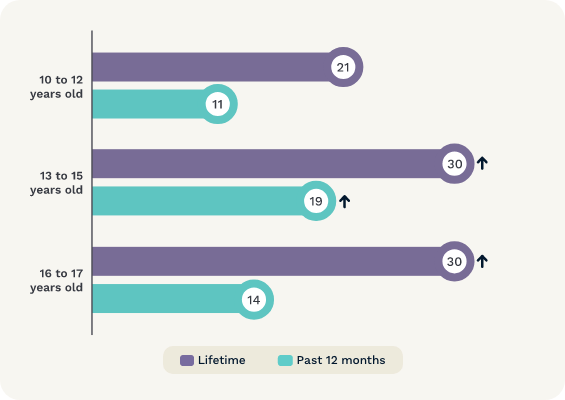
Online hate experiences are more common among teens than younger children
Graph shows prevalence of online hate experiences by child age.9
|
Children personally experience diverse forms of online hate
Of children surveyed:

|
Indicatively, 51%
of trans and gender-diverse children had at some point someone say or post offensive or threatening things to or about them because they were hateful of them being transgender, non-binary or gender diverse.
(32% had experienced this in the past 12 months.)10
42%
of sexually diverse children had at some point someone say or post offensive or threatening things to or about them because they were hateful of their sexuality.
(20% in the past 12 months.)
31%
of Aboriginal and/or Torres Strait Islander children had at some point someone say or post offensive or threatening things to or about them because they were hateful of them being Aboriginal or Torres Strait Islander.
(15% in the past 12 months.)
21%
of children with disability had at some point someone say or post offensive or threatening things to or about them because they were hateful of their disability or diagnosis.
(12% in the past 12 months.)
Of children surveyed:
|
|
14%
of girls had at some point someone say or post offensive or threatening things to or about them because they were hateful of them being a girl.
(7% in the past 12 months.)
11%
of children had at some point someone say or post offensive or threatening things to or about them because they were hateful of their skin colour, race or culture.
(5% in the past 12 months.)
10%
of children had at some point someone say or post offensive or threatening things to or about them because they were hateful of the country they came from.
(5% in the past 12 months.)
8%
of children had at some point someone say or post offensive or threatening things to or about them because they were hateful of their religion.
(4% in the past 12 months.)
7%
of boys had at some point someone say or post offensive or threatening things to or about them because they were hateful of them being a boy.
(4% in the past 12 months.)
Online hate can be perpetrated both by people known in real life and those only known online

50%
of children said they most recently experienced online hate11 by someone they didn’t already know in real life12, most commonly by someone they just happened to come across online (32%).13
39% said that the person targeting them was known to them in real life, most commonly a friend (20%).14
52%
said their most recent experience of online hate was carried out by a teenager (aged 13 – 17).15
23% were most recently targeted an adult (age 18 or older), while 14% were most recently targeted by a child (aged 12 or younger).
Children typically experience online hate on social media
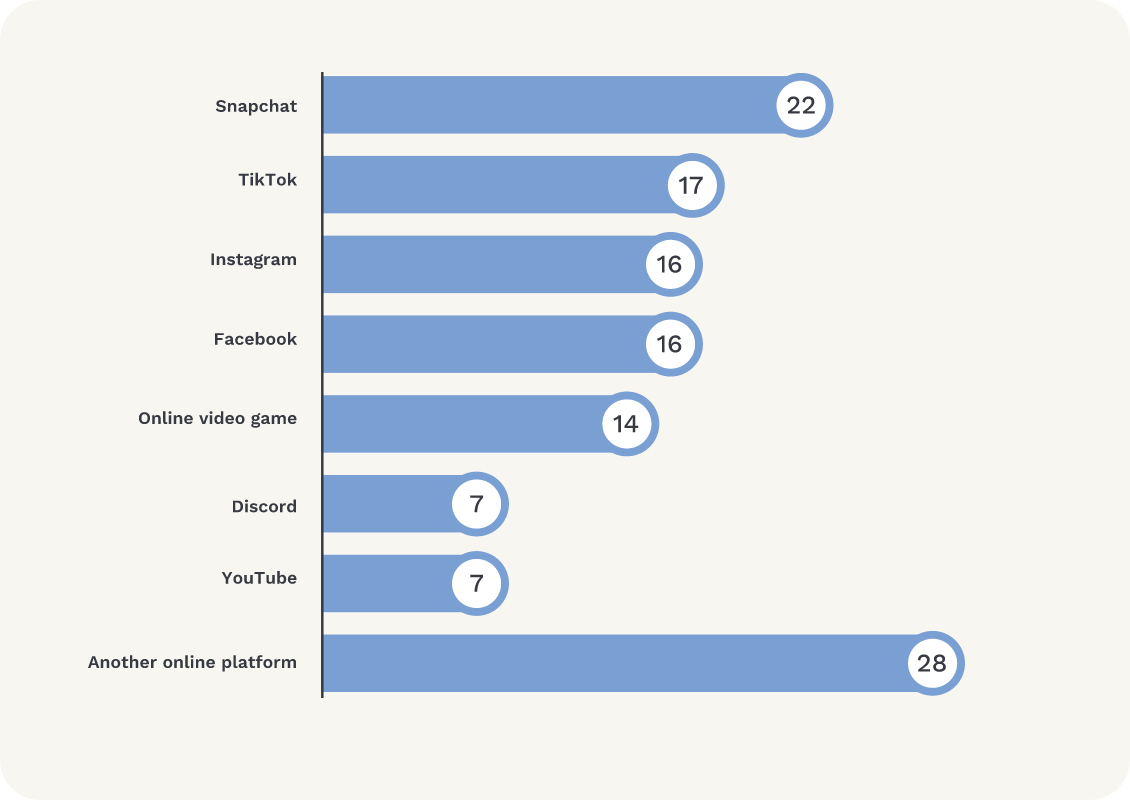
Children’s most recent experience of online hate typically occurred on social media platforms16, including Snapchat (22%), TikTok (17%), Instagram (16%) and Facebook (16%).17
|
31%
said they were most recently targeted on comments or posts on someone else’s social media page.
Others were targeted in an online group chat (25%), via message, text, email or call from one person (22%), or comments or posts on their own social media page (20%).18
For some children, online hate can spill over into their offline lives
51%
of children who were targeted with online hate by someone known to them in real life, said that the person responsible was doing similar things to them offline as well.19
Experiences of online hate trigger a range of negative emotions among children

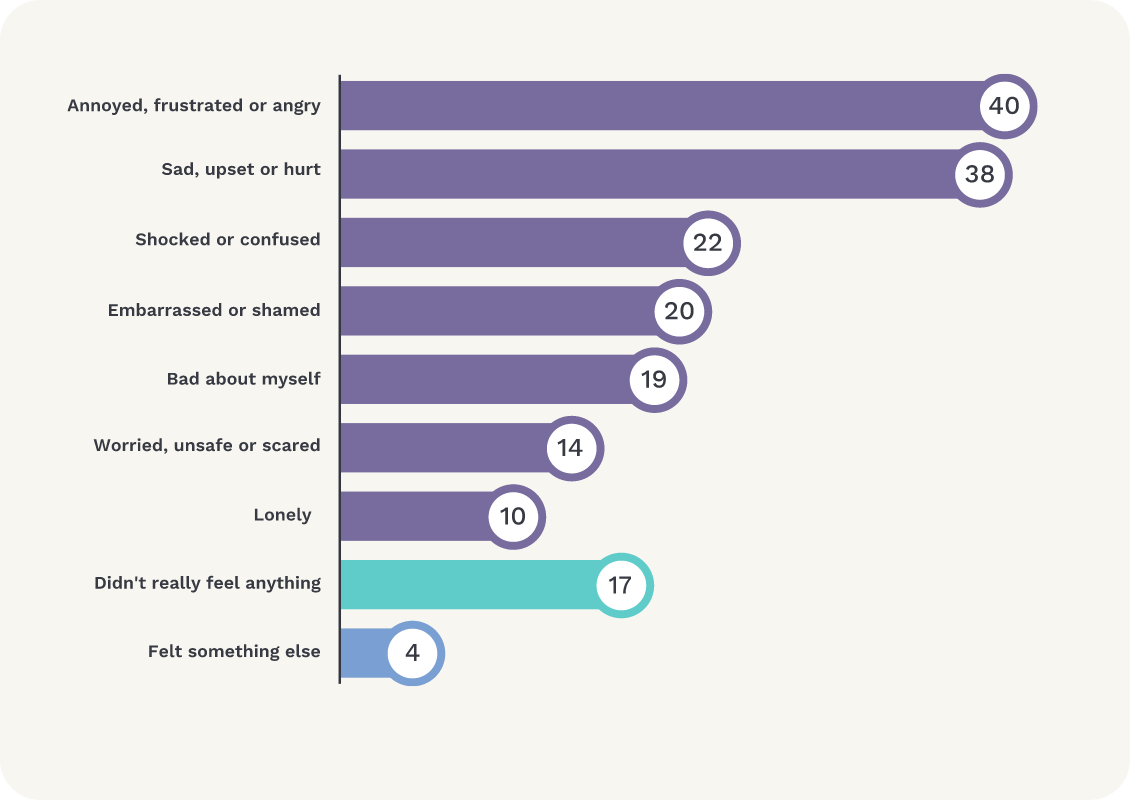
77%
of children reported feeling at least one negative emotion after their most recent online hate experience. Most commonly they felt annoyed, frustrated or angry (40%), sad, upset or hurt (38%), or shocked or confused (22%).20
|
Most children report having difficulties after personally experiencing online hate

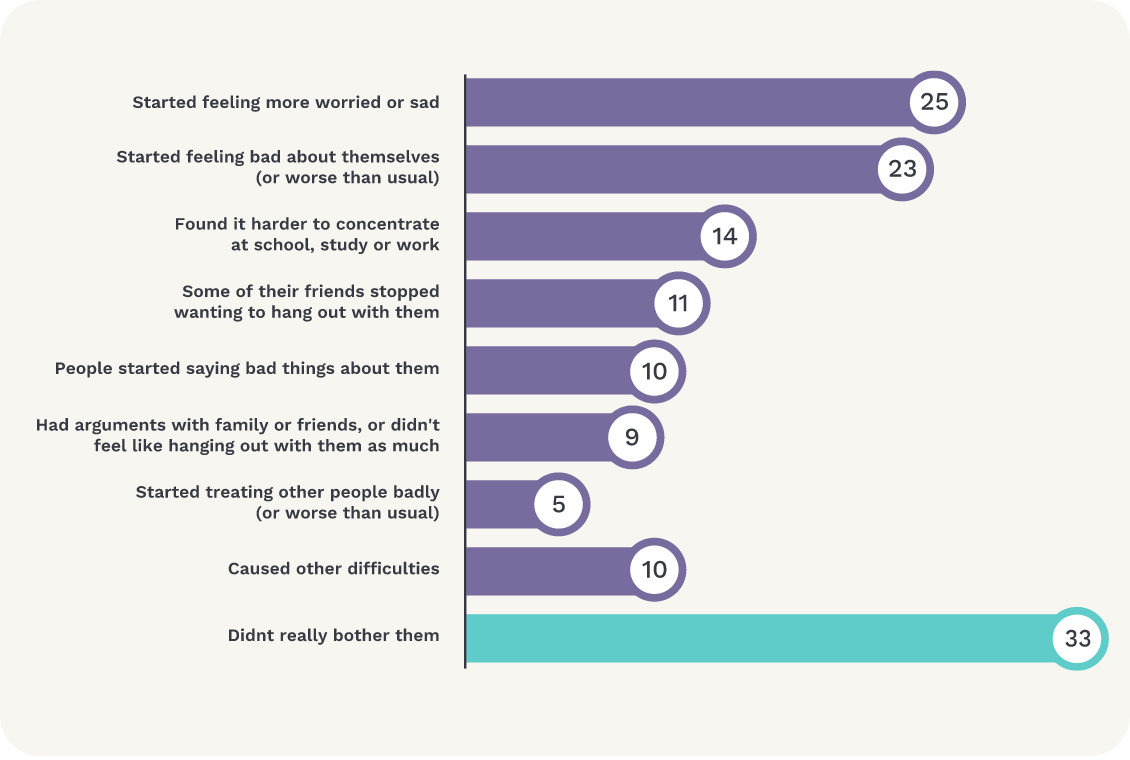
57%
reported at least one difficulty after their most recent online hate experience, most commonly that they started feeling more worried or sad (25%) or feeling bad about themselves, or worse than usual (23%).21
|
Helpful resources
eSafety’s Parents section has information for parents and carers, including information and advice about helping children stay safe online.
eSafety’s Kids and Young People sections provide useful information to help children and young people stay safe online.
Notes
1 Under the legislation, which came into effect on 10 December 2025, age-restricted social media platforms must take reasonable steps to prevent Australian children under 16 from creating or holding accounts.
2 Part of a nationally representative survey of 3,454 children aged 10 to 17 years living in Australia between December 2024 and February 2025.
3 For more information about the methodology of the research, see the methodology report.
4 Q: Has anyone online ever said or posted offensive or threatening things to or about you personally because they were hateful of …?
5 Prevalence of online hate was assessed in a recontact survey. Children were given the option of skipping certain questions in the survey, including those on their identity characteristics. Among the 2,302 children who completed the recontact survey, 304 declined to answer one or more questions about their identity characteristics and consequently weren’t asked whether they had experienced certain types of online hate. Of these 304 participants, 81 had experienced at least one other type of online hate, while 223 hadn’t experienced any other type of online hate or they didn’t know or didn’t want to say if they had done so. These 223 participants have therefore been excluded from the overall prevalence of online hate, which is based on a subset of the sample (n=2,079).
6 The smaller sample size for trans and gender-diverse children should be considered when interpreting these findings (n=54).
7 ‘Sexually diverse’ includes participants who identified their sexual orientation as 'gay or lesbian’, ‘bisexual’, ‘queer’, ‘asexual’, ‘pansexual’ or that they are ‘still working it out’. Sexuality was asked only of children aged 13–17.
8 12-month incidence for children from non-English speaking backgrounds didn’t differ significantly to 12-month incidence for children from English-speaking backgrounds.
9 Arrows denote statistically significant differences between sub-groups. The proportion of children aged 13 to 15 and 16 to 17 who had ever or in the past 12 months personally experienced online hate didn’t differ significantly.
10 Given the small sample size for trans and gender-diverse children (n=49), this finding should be considered indicative only.
11 A subset of children who had personally experienced of online hate (n=448) were asked further questions about their most recent experience of online hate.
12 Q: Keep thinking about the last time someone said or posted offensive or threatening things to or about you online because they were hateful of [RECENT EXPERIENCE]. Who did this? You can choose more than one answer.
13 Q: Think now about the last time someone you didn’t know in real life said or posted offensive or threatening things to or about you online because they were hateful of [RECENT EXPERIENCE]. How would you describe them? You can choose more than one answer.
14 Q: Think now about the last time someone you already knew in real life said or posted offensive or threatening things to or about you online because they were hateful of [RECENT EXPERIENCE]. Who did this? You can choose more than one answer.
15 Q: Keep thinking about the last time someone said or posted offensive or threatening things to or about you online because they were hateful of [RECENT EXPERIENCE]. How old do you think the person who did this was? You can choose more than one answer.
16 Q: Think only about the last time someone said or posted offensive or threatening things to or about you online because they were hateful of [RECENT EXPERIENCE]. Which platform did this happen to you on? You can choose more than one answer.
17 Platforms reported by <5% of children combined as ‘Another online platform’.
18 Q: Keep thinking about the last time someone said or posted offensive or threatening things to or about you online because they were hateful of [RECENT EXPERIENCE]. Where did this happen to you? You can choose more than one answer.
19 Q: The last time someone said or posted offensive or threatening things to or about you online because they were hateful of [RECENT EXPERIENCE], did it only happen online, or was the same person also doing things like this to you in real life?
20 Q: Keep thinking about the last time someone said or posted offensive or threatening things to or about you online because they were hateful of [RECENT EXPERIENCE]. How did you feel? You can choose more than one answer.
21 Q: Keep thinking about the last time someone said or posted offensive or threatening things to or about you online because they were hateful of [RECENT EXPERIENCE]. Did you have any difficulties because of this experience? You can choose more than one answer.
Last updated: 16/06/2026