
The eSafety schools' hub
This hub brings together key online safety resources for Australian schools.
The resources in this hub can be used to help develop a whole-of-community approach to online safety, support classroom learning, access professional development, respond to online incidents, and more.
There are also new downloadable resources specially created to help you share important online safety messages with your school community.
This hub has been created by eSafety in collaboration with education organisations across Australia, through our National Online Safety Education Council.
On this page:
Stay up to date
Sign up for the latest online safety news and resources for educators.
Key education resources
Learn how to create safer online environments and deliver online safety education.


Big issues
Help managing key online safety issues impacting schools.


Social media and newsletter content

Use these content kits to help you talk to your school community about online safety, including preventative strategies and advice on where to get help when things go wrong.
Social media kit
This kit includes suggested posts and images to share on your school's social media channels.
Newsletter and website kit
This kit includes suggested articles and images for your school's newsletter or website.
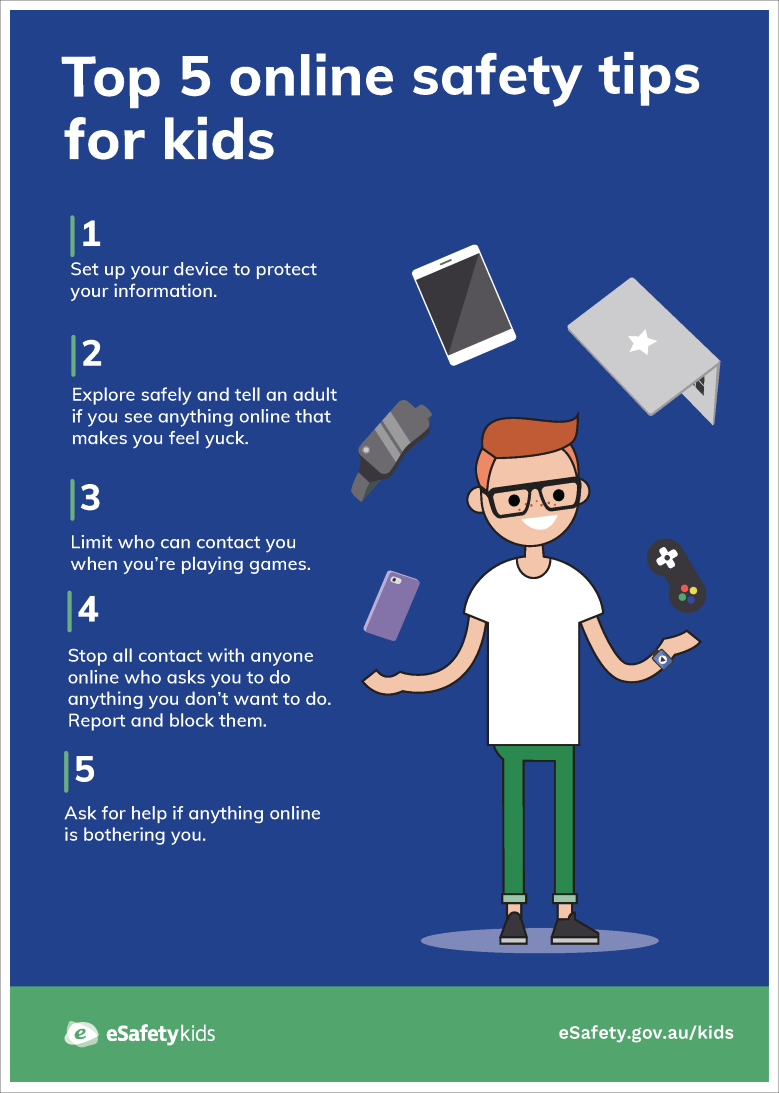
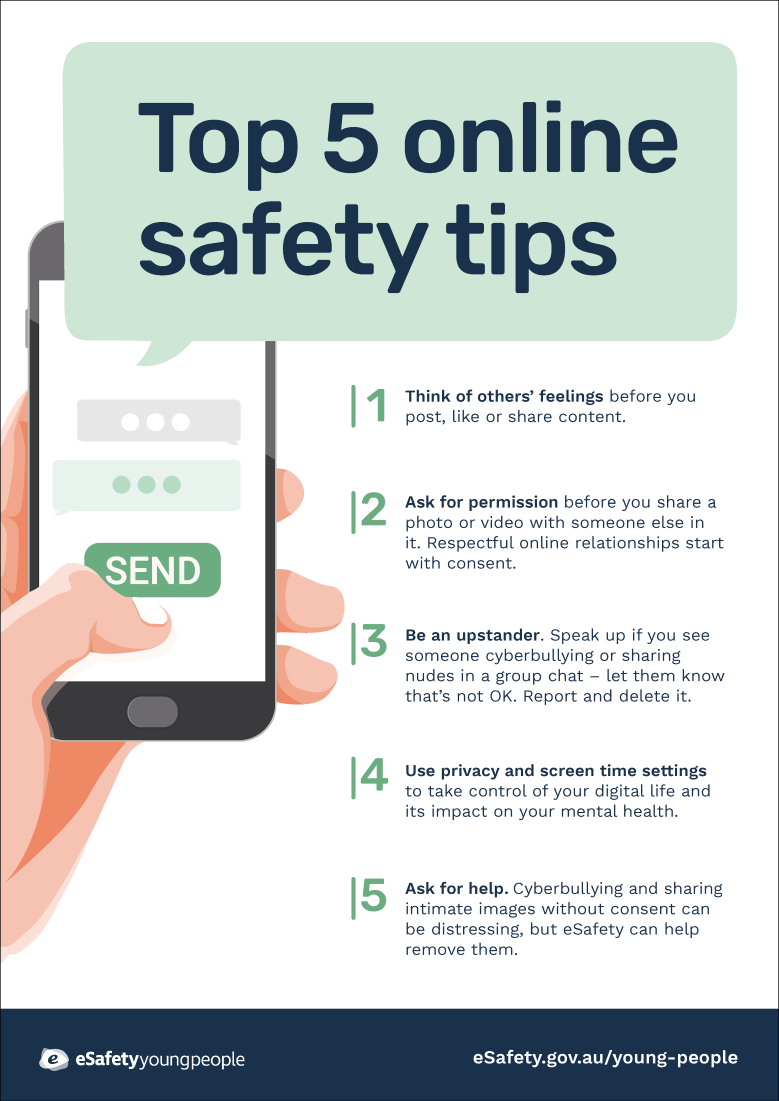
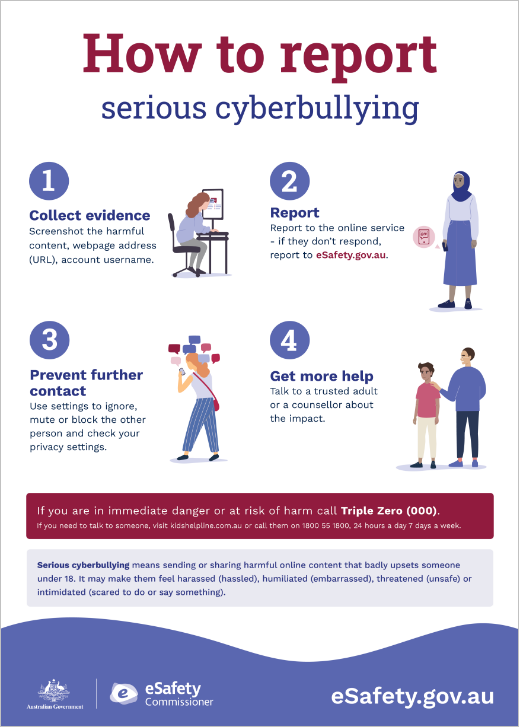
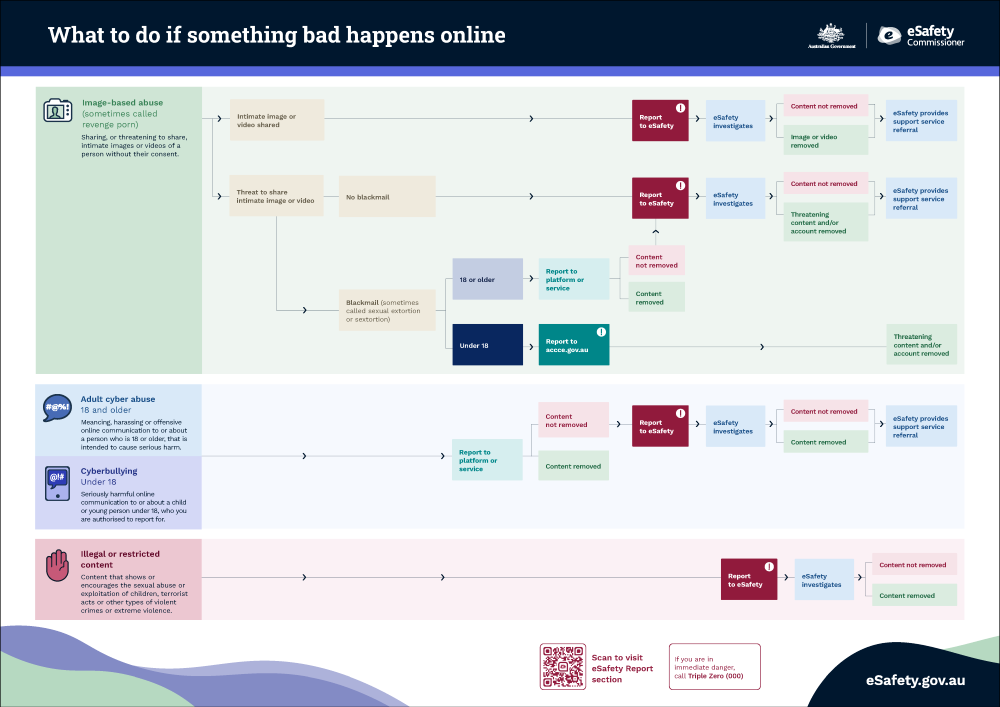
Posters
Display these posters to promote key online safety messages around your school.
Programs
Explore additional programs to support online safety at your school.


Social media changes
- As of 10 December 2025, Facebook, Instagram, Kick, Reddit, Snapchat, Threads, TikTok, Twitch, X and YouTube are required to take reasonable steps to prevent Australians under 16 from having accounts on their platforms. See the latest list.
- Under-16s are still allowed to see publicly available social media content that doesn’t require logging into an account.
- Schools may need to explore alternative methods for communicating with parents and students.
- There are exclusions for a number of platforms, including educational tools such as learning management systems. For example, Google Classroom will not be age restricted.
- YouTube videos that can be seen without logging into an account can still be shared by teachers.
- For further guidance, including whether educators will be able to use their own accounts to share age-appropriate education materials, please refer to school or education sector policies and procedures.
Find out more at eSafety’s What do the social media age restrictions mean for educators.
Related eSafety links
Find other resources to help keep you safe online:
Read our advisory on Sharing school photos and videos: AI risks, deepfakes, and how to protect students and staff.
Find out more about the social media age restrictions and access our social media 'ban' or delay FAQ for the facts.
Last updated: 20/10/2026