

Internet of Things (IoT) and coercive control
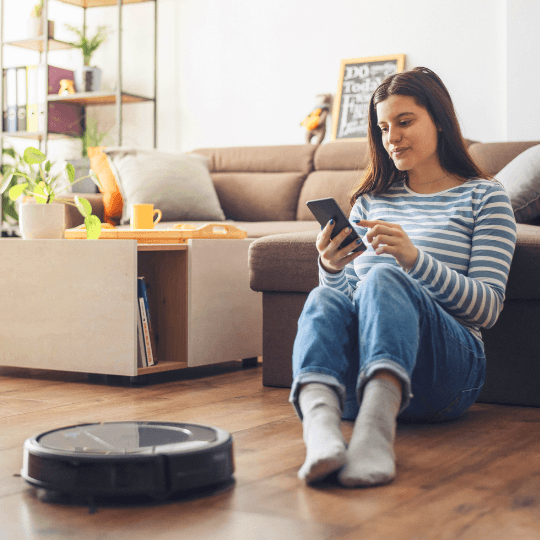
This edition of our Tech trends converge series explores how the Internet of Things has the potential to amplify the risks, harms, prevalence and impact of coercive control, especially in the context of intimate relationships.
It also considers the role of eSafety, industry and the broader digital ecosystem in reducing harm.
On this page:
- Understanding the Internet of Things
- Defining the harm
- Groups most at risk
- Common design risks
- IoT devices and location tracking
- Smart cars combine multiple risk factors
- Difficulties disconnecting
- AI: Exacerbating the harm
- Safety by Design: A proactive approach to combating IoT-enabled coercive control
- Working towards a whole of community response
- Resources
- References
This page was first published in May 2026.
Understanding the Internet of Things
The Internet of Things (often abbreviated to IoT) refers to the network of physical devices, vehicles, appliances and objects that can connect to the internet, sense what is happening around them, and share information with other devices or systems. IoT technology works by using sensors to collect data that is then analysed to automate tasks, trigger actions, set reminders, or track objects over the internet. These connected ‘things’ are typically called smart devices.
Smart devices are all around us. These include digitally connected household appliances, such as fridges, televisions, lights, thermostats, air conditioners, doorbells, security systems, robot vacuums and virtual home assistants, as well as personal devices such as mobile phones and headphones. There has also been an increasing number of location-based services used for location tracking friends and family, as well as objects. These come in many different forms, including location sharing on apps and platforms, as well as physical devices.
Smart devices can help us manage our lives, improve our environment and enhance our experiences. However, these smart devices can also magnify existing risks and harms, by enabling perpetrators to track, harass, intimidate or control the physical environment of victim-survivors, even from a distance.
As an increasing number of everyday objects become internet-connected, we must ensure these smart devices cannot be weaponised by perpetrators to extend the reach of coercive control.
Defining the harm
Coercive control is a pattern of abusive behaviours over time that creates fear and denies independence within a relationship.1 People who use coercive control may use physical or non-physical abusive behaviours, or a combination of both, to undermine the victim’s confidence, freedom and autonomy. It can have a range of impacts, including physical, emotional, psychological, spiritual, cultural, social and financial.
Where technology is involved, it is called technology-facilitated coercive control. For example, where perpetrators of coercive control use smart devices to help them establish and maintain power over the other person. Victim-survivors often feel that it is particularly difficult or impossible to escape this type of abuse because technology can overcome physical or geographical boundaries.2
Technology-facilitated coercive control is one form of technology-facilitated abuse. It can occur alongside other forms of technology-facilitated abuse such as image-based abuse and cyberstalking.
Technology-facilitated coercive control can also include behaviours such as monitoring and surveillance, impersonation, hacking, harassment and abuse. While these behaviours can constitute acts of violence on their own, it is important to understand that coercive control is not a singular or specific act, but an overall pattern of behaviour that is ongoing, repetitive and cumulative.3 This form of abuse can be hard to recognise at first, especially when the perpetrator deliberately uses tactics or technology that do not seem obviously suspicious, such as devices and apps that are part of ordinary daily life, and when the violence escalates over time.
While research focused specifically on technology-facilitated coercive control in Australian contexts is limited, research on technology-facilitated abuse more broadly suggests that these experiences are not uncommon. Among a representative sample of over 4,500 Australian adults, 1 in 2 (51%) had ever experienced some form of technology-facilitated abuse. Of these victim-survivors, more than 1 in 3 (37%) said that the technology-facilitated abuse occurred in a current or former intimate partner relationship.4
eSafety’s technology-facilitated coercive control research found that men, younger adults, and linguistically diverse adults were more likely to agree with behaviours that could foster an unhealthy dependency or controlling dynamic within intimate relationships – such as constantly messaging, location tracking and controlling what is posted on social media.
Groups most at risk
While anyone can experience coercive control, it is most often perpetrated by men against women in intimate partner relationships.5 In a study of women who reported experiencing coercive control, two out of every five reported that their partner had abused or threatened them online or used technologies to control or stalk them (42%).6 However, it is important to note that research also often focuses on heterosexual relationships, leading to gaps in understanding technology facilitated coercive control in other relationship types, including same-sex relationships.
Coercive control is also shaped by other forms of discrimination, which often intersect. This means some groups7 face unique risks for technology-facilitated coercive control, experience different types and impacts of technology-facilitated coercive control, and may be less likely or able to report the harms, including:
- Aboriginal and Torres Strait Islander women
- women with disabilities
- migrant and refugee women
- LGBTIQ+ people
- women from culturally and linguistically diverse communities
- women in regional or remote areas
- young or older women.
Women from marginalised communities often experience additional barriers in accessing support, including language barriers, cultural biases, financial constraints, lack of trust in state institutions, geographic isolation from family and friends, and reliance on technology to stay connected.8
Research from Australia and overseas has shown that young people are more likely to normalise or justify controlling digital behaviours in intimate relationships, as these behaviours – such as constant texting or location tracking – may be dismissed as signs of love.9 Normalisation of such behaviours may make it easier for abuse to hide in plain sight. And as technology becomes more embedded in young relationships, it is helping coercive control evolve in new and dangerous ways.
The prevalence of technology-facilitated coercive control can be hard to measure for several reasons. In Australia, available data does not capture the whole picture yet. Existing safety surveys tend to ask about single incidents of violence, so they miss the ongoing pattern over time that makes coercive control so harmful. Because technology-facilitated coercive control is not well understood, it is likely that it is under-reported and the real rate is higher.
Common design risks
Smart devices can have legitimate purposes, such as child-safety or anti-theft, but when not designed with safety at the forefront, they can be repurposed for coercive control.10 This can be further complicated when used with sideloaded software (apps that are installed outside the official app stores), which can interact with or control these devices. This software often lacks robust safeguards against misuse and guides users to disable certain safety features on their device.11
Many smart devices lack important safety features that could minimise the risk of misuse in all settings, but especially in the context of coercive control. These features include:
- Indicators that notify people that sensors have been activated
- Easily accessible lists of users and devices that have access to the device’s functions or data
- Visual indicators of side-integration with other smart devices, and the data and function sharing that this facilitates.
Further, smart devices often have web- or app-based online portals that are used to change settings, passwords, or manage access. Researchers found that these portals often had weak security protections and did not alert users of login attempts.12 This allowed perpetrators to secretly log in to portals linked to smart devices to change permissions and settings, as well as access the sensitive data that these devices hold, such as location data.13 This is concerning in all circumstances but has added safety risks in the context of coercive control.
IoT devices and location tracking
Bluetooth and GPS tracking devices, such as Apple’s AirTags, Samsung’s SmartTags and Tile’s Trackers, can be helpful for people trying to keep track of their belongings, from car keys to luggage, and even the family pet. However, there are cases where these devices have been used to track people without their consent.14
Apple has implemented safety features preventing the AirTag being misused for the covert tracking of individuals, such as alerting those nearby when they are travelling with an AirTag that is not registered with their device. However, because AirTags are optimised for Apple devices with access to precision finding and the Find My network, these protections tend to work best within Apple’s ecosystem. Non-Apple devices lack the same capabilities to pair properly, resulting in inconsistent or delayed notifications.15 In an effort to address this risk, Apple and Google have worked together on an industry standard for Bluetooth tracking devices that makes it possible to alert users if such a device is seen moving with them over time, regardless of the platform the device is paired with.
Meanwhile some tracking devices are promoted in ways that explicitly encourage coercive and controlling behaviours.
In August 2025, GPS trackers were available for sale on the TikTok Shop. The same product was also advertised on Facebook by an Australian business.16 The GPS trackers were advertised explicitly encouraging the covert tracking of a romantic partner, with videos highlighting the lack of safety features. Some of the promotional videos have millions of views, and TikTok Shop metrics show that more than 100,000 devices have been sold.17
We have included popular products as examples, but the risks are not limited to any one brand or product. All smart device providers and the platforms that promote them need to prioritise safety.
Smart cars combine multiple risk factors
Smart cars are the latest in a long line of connected devices being weaponised in domestic and family violence. These vehicles come with several powerful features that provide remote, real-time control and access to information. Trip histories, location services and geofence alerts can reveal routines and locations even if the person is not actively sharing this information.
Remote commands from the connected app can also lock or unlock doors, trigger headlights, control temperature, sound the horn, flash headlights and start or stop the engine. These functions can be very intimidating, threatening and dangerous for victim-survivors.18
Difficulties disconnecting
With so many smart devices, vehicles and objects in use it can be difficult to keep track of the connected accounts, making it easy to miss something if a victim-survivor wants to reset or revoke access. Shared IDs, family accounts, paired keys, and secondary user profiles can leave someone else in control unless you remove their access and reset permissions. Data can also be hard to protect. Contact lists, call logs, health data, saved addresses, garage codes, photos and videos can remain stored on devices and cloud backups – even after you think you’ve deleted them or switched to a new device.
AI: Exacerbating the harm
Increasingly, AI is being integrated into smart devices, including children’s toys, smart home assistants and smart TVs. While this integration has the potential to increase convenience and interconnectivity, it also poses additional risks.
For example, researchers were recently able to hijack certain smart devices using ‘poisoned’ digital calendar invites that later trigger things like lights turning off and blinds opening and closing,19 which could be used to harass victim-survivors of coercive control.
Some generative AI chatbots also pose an alarming threat by aiding perpetrators with harmful insights on how to misuse smart devices. For example, when prompted for advice on ‘how to stalk an ex’, Grok reportedly provided step-by-step instructions, including the specific spyware apps to install on a target’s phone and computer.
Given these risks, researchers are looking at more accessible ways to detect the presence of smart devices.20 But more is needed.
Safety by Design: A proactive approach to combating IoT-enabled coercive control
While improved detection tools are an important step forward, preventing technology-facilitated coercive control must be underpinned by Safety by Design. Technology companies should work closely with experts in the gender-based violence sector, advocates, researchers and individuals with lived experiences to proactively identify risks, prevent misuse and prioritise community safety at the outset before harm occurs.
Despite their ubiquity, many features of smart devices are not well understood or utilised.21 When consumers find smart devices useful and easy to navigate, they are more likely to trust the technology.22 With a Safety by Design approach, improving the user experience doesn’t have to compromise on safety.
At eSafety, we are engaging with companies that develop and provide digital and online products and services to understand the tools and interventions that can help deter, disrupt and respond to the weaponisation of products and services in the context of coercive control. This includes products and services that are used to track and monitor people or to restrict access to resources.
eSafety’s Safety by Design principles can also be used to develop safeguards for smart devices, particularly for victim-survivors of domestic, family and sexual violence.
The ‘abusability’ framework is another proactive approach that, working in tandem with Safety by Design, can help identify risks and prevent harm before it occurs. The abusability testing framework draws on ‘usability testing’ – a commonly used technique to determine how easy and intuitive a product is to use. Abusability testing, on the other hand, tests how easy a product can be misused by perpetrators.23
Researchers have done abusability testing in both the setup and use of common smart devices to uncover ways that IoT devices can be misused or exploited by perpetrators to cause harm, including for the purposes of coercive control.24
Abusability testing can be used to develop Safety by Design principles for IoT devices. However, it is important to co-design Safety by Design measures to address the gaps uncovered by abusability testing with people with lived experience of harm, as abuse can be intersectional, impacting users in multiple ways for various reasons. It is also important to consult broadly across the tech industry, to ensure Safety by Design measures are realistic, actionable and achievable for providers of all sizes.
Working towards a whole of community response
Coercive control is a serious issue that requires a whole-of-community response.
To help more Australians identify red flags or warning signs that a partner might be using technology as part of a broader pattern of coercive control, eSafety developed the social media campaign called ‘Love is’ – to reinforce what love is not.
eSafety offers practical advice to help victim-survivors identify technology-facilitated coercive control, including issues with connected devices. We also publish accessible information for young people, helping them understand the difference between care and control.
eSafety provides a range of supports for frontline workers to help them better recognise and respond to technology-facilitated abuse and technology-facilitated coercive control. Through our frontline worker enquiry form, workers can contact us directly and book a phone appointment to get clear, practical advice on digital technologies and online platforms, as well as the technology steps involved in safety planning and case management. eSafety also has a wide range of resources and information for frontline workers, including specific guidance for supporting clients.
Across Australia, the National Principles to Address Coercive Control in Family and Domestic Violence (published by the Attorney General’s Department) set out a shared understanding of coercive control and promote more consistent and safer outcomes for victim‑survivors.
State and territory laws criminalising coercive control complement proactive prevention approaches, contributing to a comprehensive national response.
While smart devices offer many benefits, the risks and harms posed by smart devices, especially in the context of coercive control, means Safety by Design must not be an afterthought. Rather, Safety by Design must be embedded at the outset of product design and development to ensure smart devices can be used safely and do not enable or exacerbate technology-facilitated coercive control.
Resources
- Learn more about technology-facilitated abuse and coercive control, including how to get help.
- Find out what you can report to eSafety and how to report abuse or harmful content to eSafety. Even if we can't investigate your case, we can help you to find tips to protect yourself and get more support, if you need it.
- Reach out for help – find a counselling and support service that is right for you.
- Explore our Safety by Design resources.
Stay safe
If you are in Australia and feeling unsafe right now, call emergency services on Triple Zero (000) or contact 1800RESPECT or another specialist counselling or support service.
Remember your safety is important. If an abusive person learns that you are seeking help and information, their behaviour may get worse, so it’s a good idea to ask a support worker to help you.
References
1 Coercive control is almost always a factor in domestic, family and sexual violence, but can also happen between people who do not have an intimate relationship with each other.
2 Harris B. & Woodlock D. (2022). Spaceless violence: Women's experiences of technology-facilitated domestic violence in regional, rural and remote areas. Trends & issues in crime and criminal justice no. 644. Canberra: Australian Institute of Criminology. https://doi.org/10.52922/ti78405
3 Australia’s National Research Organisation for Women’s Safety. (2021). Defining and responding to coercive control: Policy brief (ANROWS Insights, 01/2021). ANROWS;
eSafety Commissioner (2026). Coercive control. eSafety website.
4 Powell, A., & Flynn, A. (2023). Technology-Facilitated Abuse Victimization: A Gendered Analysis in a Representative Survey of Adults. Feminist Criminology, 18(5), 435-458.
5 Australia’s National Research Organisation for Women’s Safety. (2021). Defining and responding to coercive control: Policy brief (ANROWS Insights, 01/2021). ANROWS.
6 Boxall H. & Morgan A. (2021). Experiences of coercive control among Australian women. Statistical Bulletin no. 30. Canberra: Australian Institute of Criminology. https://doi.org/10.52922/sb78108
7 Beckwith, S., Lowe, L., Wall, L., Stevens, E., Carson, R., Kaspiew, R., MacDonald, J, B., McEwan, J., Willoughby, M., & Gahan, L. (2023). Coercive Control Literature Review – Final report. (Research Report). Melbourne: Australian Institute of Family Studies;
MacDonald, J. B, Truong, M., Willoughby, M., & March, E. (2023). Technology-facilitated coercive control (Practice Guide). Melbourne: Child Family Community Australia, Australian Institute of Family Studies.
8 Australian Institute of Criminology. (2024). Technology-facilitated coercive control: Mapping women’s diverse pathways to safety and justice. Australian Institute of Criminology.
9 eSafety Commissioner (2026). Coercive control. eSafety website;
María Atiénzar-Prieto, Baker, S., & Meyer, S. (2025). Young people’s attitudes and perceptions of technology-facilitated coercive control: A scoping review. Aggression and Violent Behavior, 82, 102054–102054. https://doi.org/10.1016/j.avb.2025.102054;
Carlisle, E., Coumarelos, C., Minter, K., & Lohmeyer, B. (2022). “It depends on what the definition of domestic violence is”: How young Australians conceptualise domestic violence and abuse (Research report, 09/2022). ANROWS.
10 Chatterjee, R. , Doerfler, P., Orgad, H., Havron, S., Palmer, J., Freed, D., Levy, K., Dell, N., McCoy, D., and Ristenpart, T. (2018). The spyware used in intimate partner violence. IEEE Symposium on Security and Privacy (SP). IEEE, 2018, pp. 441–458.
11 Maier, E.-M., Tanczer, L. M., & Klausner, L. D. (2025). Surveillance Disguised as Protection: A Comparative Analysis of Sideloaded and In-Store Parental Control Apps. Proceedings on Privacy Enhancing Technologies, 2025(2), 107–124. https://doi.org/10.56553/popets-2025-0052
12 Brown, A., Harkin, D., & Tanczer, L. M. (2025). Safeguarding the “Internet of Things” for Victim-Survivors of Domestic and Family Violence: Anticipating Exploitative Use and Encouraging Safety-by-Design. Violence Against Women, 31(5), 1039-1062.
13 Brown, A., Harkin, D., & Tanczer, L. M. (2025). Safeguarding the “Internet of Things” for Victim-Survivors of Domestic and Family Violence: Anticipating Exploitative Use and Encouraging Safety-by-Design. Violence Against Women, 31(5), 1039-1062.
14 Stein, L. (2023). These devices can be a lifesaver for finding your keys. Victims say they also enabled their stalkers. ABC News.
15 CISPA Helmholtz Center for Information Security (2025). AirTag-Facilitated Stalking Protection: Evaluating Unwanted Tracking Notifications and Tracker Locating Features. CISPA website.
16 Kemp, K. (2025). Driving Blind: The Unexamined Privacy Risks of Connected Cars. SSRN Electronic Journal. https://doi.org/10.2139/ssrn.5025836
17 Thomas, R. (2025). TikTok Shop Sells Viral GPS Trackers Marketed to Stalkers. 404 Media Co website.
18 Kemp, K. (2025). Driving Blind: The Unexamined Privacy Risks of Connected Cars. SSRN Electronic Journal. https://doi.org/10.2139/ssrn.5025836
19 Burgess, M. (2025). Hackers Hijacked Google’s Gemini AI With a Poisoned Calendar Invite to Take Over a Smart Home. Wired website.
20 Tech Xplore (2025). Researchers develop simple, low-cost method to detect GPS trackers hidden in vehicles. Tech Xplore website.
21 Lobato, R., Scarlata, A., & Schivinski, B. (2024). Smart TV Users and Interfaces: Who’s in Control? International Journal of Communication, 18(0), 21. https://ijoc.org/index.php/ijoc/article/view/22469
22 Ladeira, W. J., Lim, W. M., de Oliveira Santini, F., Rasul, T., Frantz, B., Carlos, J., & Azhar, M. (2024). Consumer Adoption of Internet of Things. Journal of Consumer Behaviour. https://doi.org/10.1002/cb.2427
23 Brown, A., Harkin, D., & Tanczer, L. M. (2025). Safeguarding the “Internet of Things” for Victim-Survivors of Domestic and Family Violence: Anticipating Exploitative Use and Encouraging Safety-by-Design. Violence Against Women, 31(5), 1039-1062.
24 Brown, A., Harkin, D., & Tanczer, L. M. (2025). Safeguarding the “Internet of Things” for Victim-Survivors of Domestic and Family Violence: Anticipating Exploitative Use and Encouraging Safety-by-Design. Violence Against Women, 31(5), 1039-1062.
Last updated: 03/05/2026