
Supporting children experiencing domestic and family violence

Children in domestic and family violence situations can experience tech-based abuse in different ways. Every child needs to be supported based on their individual situation.
The resources for frontline workers on this page explain the tech risks that children experience as part of domestic and family violence and some ways to reduce them. They include a safety assessment and planning guide, case studies and advice about how to talk with children about tech-based abuse and advice to help parents recognise over-controlling, abusive behaviours.
Recognising tech-based abuse of children and young people
What is tech-based abuse?
Tech-based abuse (also known as technology-facilitated abuse) is when someone uses a digital device or online platform to harm another person. This includes using it to establish or keep coercive control over the person.
Tech-based abuse is often part of domestic and family violence, and our research found more than a quarter (27%) of domestic and family violence cases involve children and young people who are experiencing it.
In some cases, young people may also experience tech-based abuse within their own romantic or sexual relationships.
Who is most likely to use tech-based abuse against the child?
Children or young people might experience abuse from a parent or carer, someone their parent is dating, another family member or someone else sharing the home with the child or young person. It can also happen in their own romantic and sexual relationships.
What does the abuse look like?
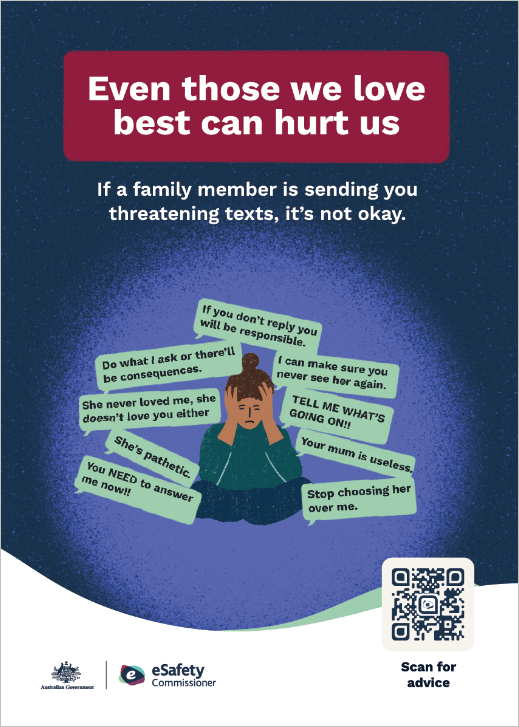
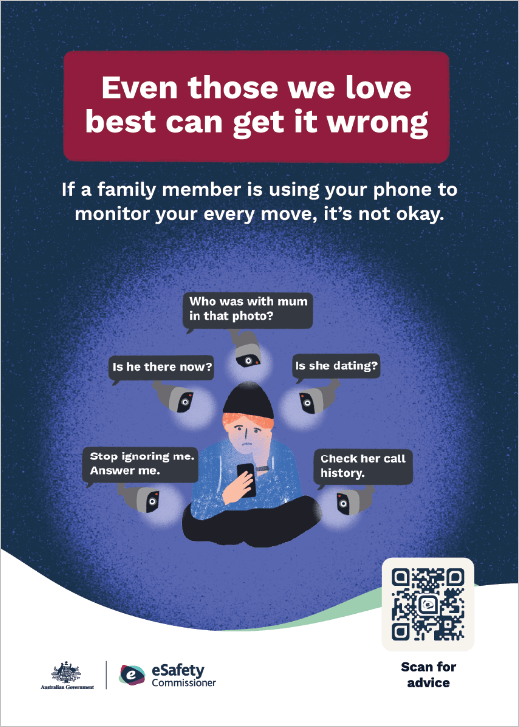
Tech-based abuse may include threats and intimidation, harassment, monitoring, stalking, the creation of fake online accounts, and the removal of access to devices or the online platforms and services that the child uses to connect with others.
The child can be affected in multiple ways:
- They can be direct victims of tactics such as tracking, monitoring and harassment.
- The tactics can be used to manipulate the child in a way that also abuses their parent or carer.
- They can be traumatised by seeing or experiencing tech-based abuse directed at a parent or carer.
The behaviours may intentionally or unintentionally contribute to coercive control of the child.
Warning signs or ‘red flags’
Tech-based abuse won’t look the same for every child or young person, so identifying the warning signs can be difficult. The child might be:
- receiving repetitive or harassing phone calls, voicemails, or messages over long periods
- showing concern about revealing their location online or one of their parents’ locations
- finding it difficult to establish trusting relationships, distancing themselves from friends or family, or showing high levels of mistrust in others
- displaying heightened awareness or fear of being watched or having their device tracked
- using a ‘fake’ profile to avoid contacts on ‘real’ accounts (such as an abusive parent)
- forming close relationships with strangers online
- interacting with ‘fake’ accounts set up by an abuser to trick the child into talking with or revealing sensitive information to them
- receiving smart toys, watches, wearables or other GPS-enabled (tracking) devices as gifts or rewards
- using apps on their devices known to track and monitor the user
- avoiding previously used online games, apps and platforms
- revealing to you that someone has cut off their internet access or taken away or destroyed their devices.
Note: Children and young people experiencing domestic and family violence may also be at risk of sexual abuse. This can happen online to any child at any age, but there are things we can do to protect them. Find out more about child sexual abuse online.
Online safety resources to support children
Keep in mind
It’s important to remember that children and young people who have experienced tech-based domestic violence are victim-survivors.
While it’s often best for the child to stay connected online where possible, their safety and wellbeing is the main priority and needs to be taken into consideration when dealing with tech-based abuse.
Support workers need to be prepared to:
- help the child collect evidence of the abuse
- report it where appropriate
- plan for the child or young person’s ongoing safety (our eSafety resources can help you do this).
Use the resources to:
- help you talk about the child’s experiences with them and their family
- identify risks and work with children and young people to improve online safety.



Download
Children, young people and tech-based abuse posters for your organisation, service or practice.
FAQs
Tech-based abuse may be a new concept to you or the children you work with. Addressing the impacts on children and young people may be new and feel overwhelming.
These questions and answers may help with some of the common issues.
Click or tap on the + to expand.
What forms of tech-based abuse do children and young people commonly experience?
Research commissioned by eSafety in 2020 found that children experiencing domestic and family violence most commonly experienced:
- monitoring and stalking – 45%
- threats and intimidation – 38%
- blocking communication – 33%.
This abuse typically involves everyday technologies such as mobile phones (79% of cases). When this research was conducted, most of the abuse involved texting (75%) or abuse on Facebook (59%).
The abuse caused a range of harm and distress to children, including:
- mental health – 67%
- relationship with the other parent or carer – 59%
- everyday activities outside of home – 59%.
In each of the child’s relationships the abuse may differ. The eSafety My Tech Safety Plan can be used to put strategies in place that reduce the risk of tech-based abuse.
How should I respond if a child or young person does not have a protective parent or carer in their life?
It’s important to consider that not every child or young person has a safe, protective parent or carer, especially children experiencing domestic and family violence.
Let them express themselves about their relationships without making assumptions about their situation.
It’s especially important to help children and young people identify other trusted adults in their lives if possible. Trusted adults should listen to children and take action to help keep them safe. They may include people such as family members, friends, teachers, school counsellors, health practitioners or community leaders.
If a young person is not feeling heard or supported in these conversations, encourage them to seek alternative options such as a crisis support service. These are free, confidential and don’t require parental consent:
Kids Helpline (1800 55 1800 or webchat)
Lifeline (13 11 14)
Headspace (1800 650 890 or webchat)
How do I support co-parenting families to establish healthy tech use?
When domestic or family violence is present in co-parenting arrangements, you may need to consider how technology safety planning and strategies are set up for any children and young people in the situation. It is important to keep the child or young person’s safety in mind. Consider if making changes to their tech or tech use will escalate a situation especially with an abusive parent.
It may be useful to share eSafety’s Keeping your family safe which provides tips about staying safe online.
How can I keep up to date with tech changes?
You don’t need to be a tech expert to act against tech-based abuse. Our research found that it mostly occurs using common, multi-use devices such as mobile phones.
Our Advisories can help you stay up to date with tech information that may be useful in your work. The eSafety Guide is another resource for understanding popular apps and platforms, including how to protect your personal information and report harmful content.
You can also subscribe to eSafety updates specifically for people working with children, young people and families. You'll receive information on events and the latest advice, resources and research to help you support families and communities to keep safe online.
Should I report tech-based abuse to the police?
Do you believe a child or young person is in immediate danger? Please call emergency services on ‘000’ immediately.
Police and legal services can help to protect and support victim-survivors of tech-based domestic, family or sexual violence.
eSafety has more information about how to get police and legal help.
Mandatory reporting to child protection authorities and/or police is a legal obligation for those working with children where there is known or suspected child abuse and neglect, and some other types of harm or neglect. Australian states and territories each have their own mandatory reporting laws. Check your organisation’s policies and procedures to ensure you understand your mandatory reporting responsibilities. Some forms of tech-based abuse are crimes under Australian law.
Even in situations where mandatory reporting is not required, you can support children and young people who may be interested in reporting to the police or contacting legal services based on their situation, safety, healing and recovery.
What can schools do about tech-based abuse?
Schools play an important role in safeguarding against online risks.
If you’re working in a school or school environment, eSafety education resources, including our Toolkit for Schools can help you create safer online environments.
Get support service advice
Frontline workers can contact eSafety’s Technology-Facilitated Abuse Support Service using the form for trauma-informed guidance and advice when they're supporting clients dealing with tech-based abuse as part of family, domestic and sexual violence.
Professional development
eSafety offers free professional development webinars for domestic, family and sexual violence service providers, support workers and those who work with children and young people experiencing tech-based abuse.
There is also free professional learning for teachers. It aims to support educators and those who work with young people in school settings to integrate online safety into their teaching and learning programs and student wellbeing education.
More information
Young people: These pages deal with various online safety issues, including for young people who may be at risk of or experiencing tech-based abuse. You can also share our advice on online dating, consent and sexting and sending nudes with older children.
Parents: Keeping your family safe has practical tips for parents to talk about tech-based abuse with their children as well as for staying safer online together.
Counselling and support services: If a child experiencing tech-based abuse requires further support, this resource may help you find the right service.
Support services
1800RESPECT
If you or someone you know is experiencing, or at risk of experiencing domestic, family or sexual violence, you can get support by calling or texting, or visiting the website for online chat and video call services.
Kids Helpline
5 to 25 year olds. All issues. Confidential phone counselling available all day, every day. Online chat available 24/7, 365 days a year.
Headspace
12 to 25 year olds. All issues. Phone counselling and online chat available 3pm to 10pm AEST, every day.
Last updated: 12/11/2025