
Help in Easy Read format
Easy to read online safety information and advice with images to support the key messages.
You can click these links to go to each part of this page:
- Being safe online booklet
- Cyberbullying booklet for people under 18
- Adult cyber abuse booklet and poster for people 18 and older
- Image-based abuse booklet and poster
- What you can do about abuse through technology
- How the social media age restrictions might affect you booklet
- Information about scams booklet
- Stop Think Check: How to stay safe online booklet and workbook
- Be in charge of what you see online booklet
- Research report summaries
These resources are for people with low literacy, or with intellectual or cognitive disability. They are in Easy Read or Easy English format.
A support person may help the reader to understand the information and make decisions about the advice.
These downloadable booklets:
- explain one idea per sentence
- use basic language and grammar
- use subheadings, bullet points and white space to break up the text
- use a simple font, layout and design
- use images that are easily understood and add meaning to the text.
Note: When using the resources on this page, please keep in mind that social media age restrictions are now in effect.
This means that age-restricted platforms, including Facebook, Instagram, Kick, Reddit, Snapchat, Threads, TikTok, Twitch, X and YouTube, must prevent Australians under 16 from creating and having accounts. See the latest list.
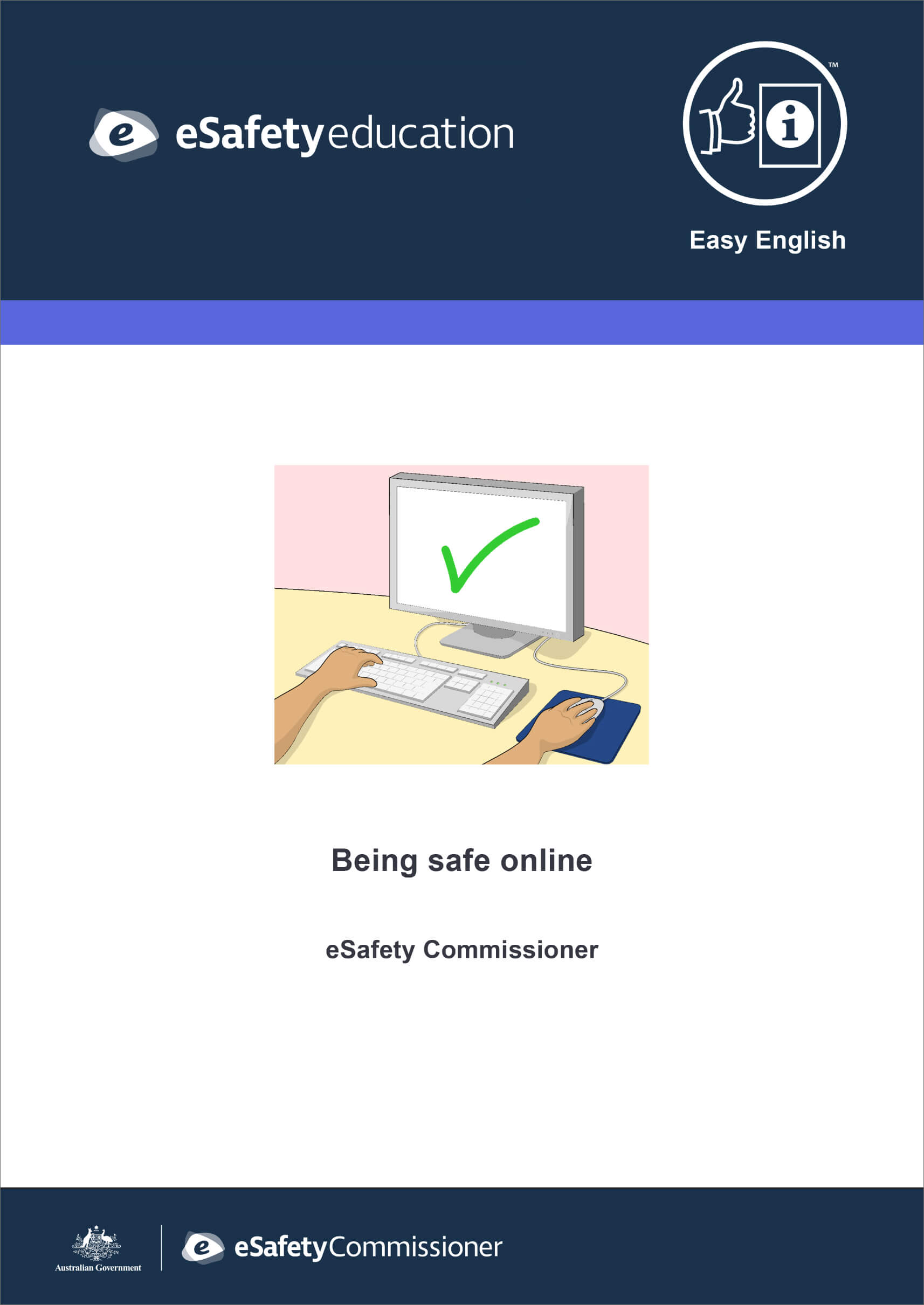
Being safe online booklet
This booklet helps the reader understand how to stay safe online, the concepts of privacy and online friends, and how to get help if something goes wrong.
Click on the link to download and print copies.
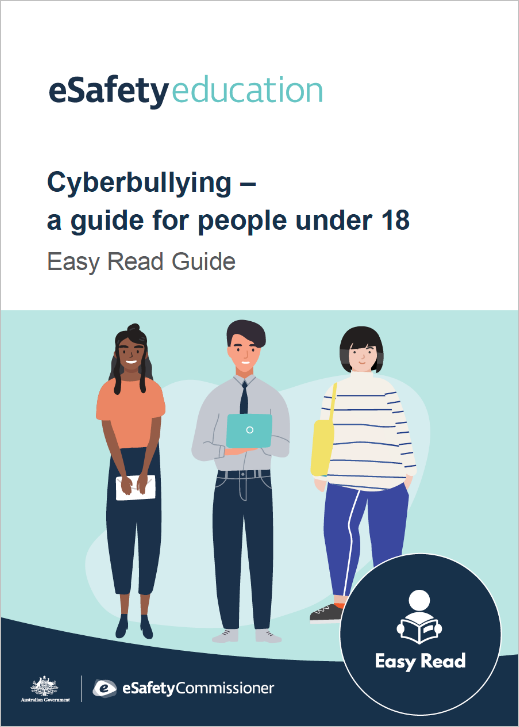
Cyberbullying booklet for people under 18
This booklet explains what cyberbullying is, how to report it, and how to get help if you are bullied online.
Click on the link to download and print copies.
Adult cyber abuse booklet and poster for people 18 and older
This poster and booklet describe adult cyber abuse and explain how to deal with it and report it. Adult cyber abuse is when someone does bad things online to another person who is 18 years or older.
Click on the links to download and print copies.
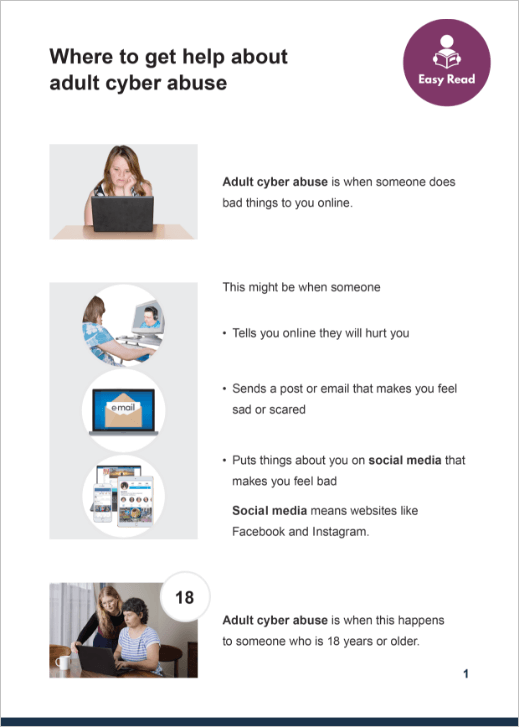
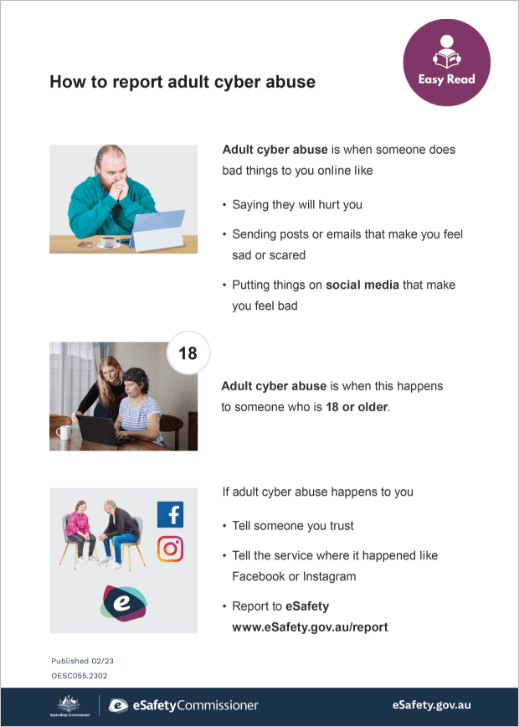
Image-based abuse booklet and poster
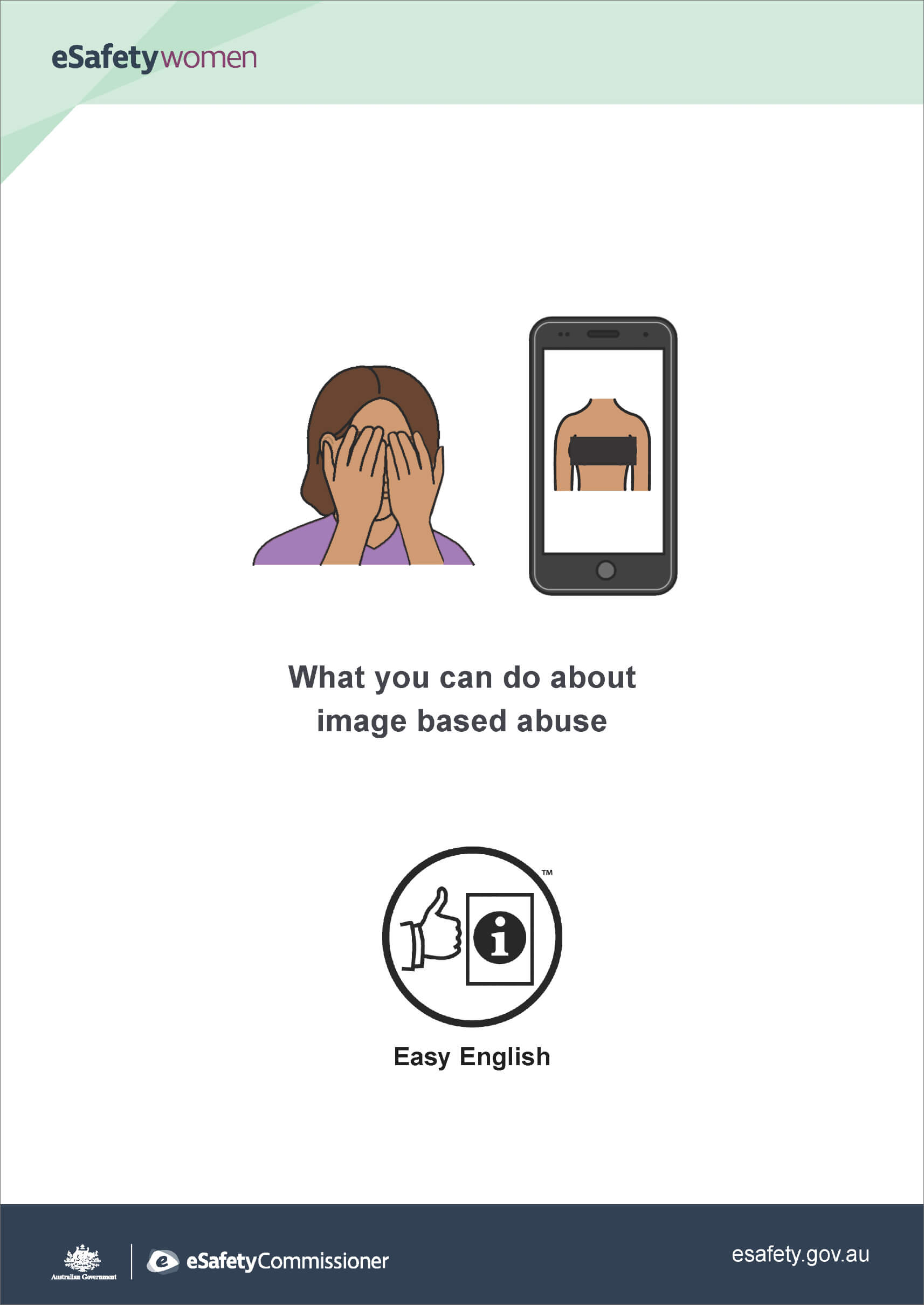
This booklet and poster explain the concept of image-based abuse and how to get help if it happens.
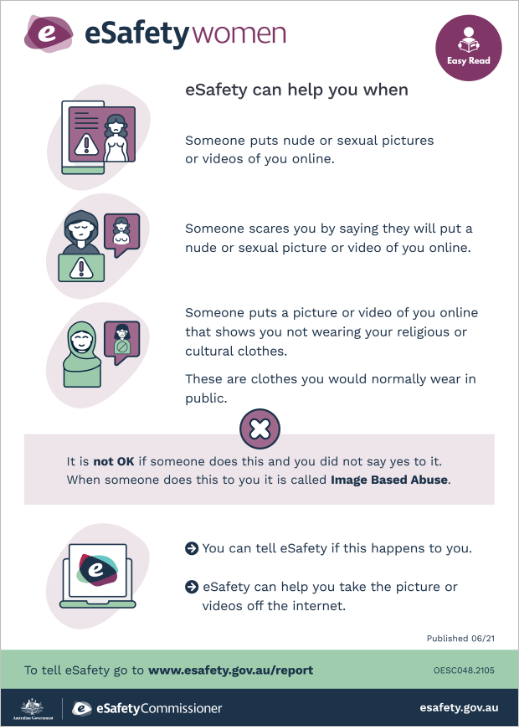
Image-based abuse is when someone shares an intimate image or video of you without your consent.
An 'intimate' image or video might show:
- someone who is naked or partly naked
- a person doing something private (like using the toilet, having a shower or getting sexual
- a person without cultural or religious clothing they usually wear, like a hijab or turban.
Click on the links to download and print copies.
What you can do about abuse through technology
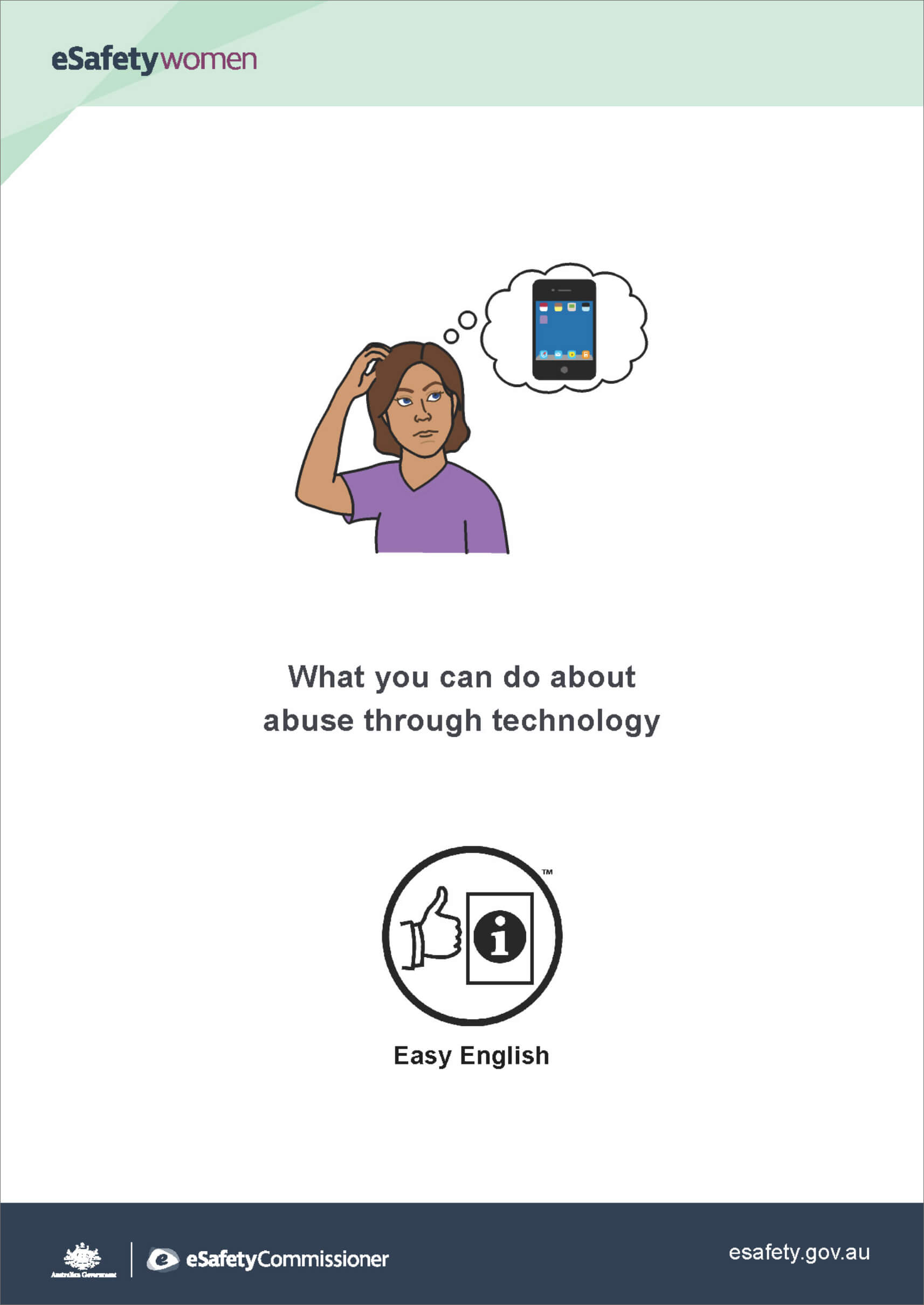
This booklet explains the concept of technology-facilitated abuse and how to get help if it happens.
Technology-facilitated abuse or 'tech-based abuse' includes when someone uses technology to stalk, harass or monitor you within a close relationship.
Click on the links to download and print copies.
How the social media age restrictions might affect you
This booklet is about the government's law for social media apps. It explains how the law keeps young people safer online.
The information in it is for people under 16 who might still use social media apps.
It explains how social media apps check your age.
It has advice on how scams might try and trick you to take your money or personal information.
Click on the link to download and print copies.
Information about scams booklet
This booklet has information about online scams.
A scam is when someone tricks you to take your money or personal information.
It has information on some common scams that happen to people and what to do if you get scammed.
Click on the link to download and print copies.
Stop Think Check: How to stay safe online booklet and workbook
The booklet explains how you can stay safer online by using critical thinking.
Critical thinking means you do not believe something straight away.
The booklet tells you about the 3 steps to stay safer online.
They are
Stop
Think
Check
The workbook is where you can practice the 3 steps to stay safer online.
The workbook tells you about times when you might need to stop think and check before doing something online.
Click on the links to download and print copies.
Be in charge of what you see online booklet
This booklet helps you be in charge of what you see online.
It explains how computer programs choose what you see online and why this can be bad for you.
It also tells you about echo chambers and how you can escape them and see different things online.
Click on the link to download and print copies.
Research report summaries
Young people with disability using the internet
This booklet summarises the key findings of the research, which explores how young people with disability use the internet and how parents feel about their child with disability being online.
Technology abuse of women with intellectual disability
This booklet summarises the key findings of the research, which explores experiences of technology-facilitated abuse among women living with intellectual or cognitive disability.
Evaluation of eSafety Women’s disability workforce and frontline worker program
This booklet summarises the key findings of the research, which was conducted to evaluate the impact of the program 12 months after its launch.

How adults with intellectual disability experience online abuse
This booklet summarises the key findings of the report, which explores how people with intellectual disability use the internet and how they deal with abuse. The fact sheet is also based on information in the report. It explains the concept of online abuse and how to get help if it happens.
Last updated: 20/10/2026