

Need help dealing with violent or distressing online content? Learn more

Quick Exit

Click here to exit quickly,
browser history won't be cleared.

Dealing with sexual extortion

Dealing with sexual extortion

Sexual extortion or ‘sextortion’ is a form of blackmail where someone threatens to share a nude or sexual image or video of you unless you give in to their demands.

It starts with something that seems casual – a DM, flirty chat, someone asking you to move to a private app and to share a nude or sexual photo. Then things can change quickly.

What felt casual can suddenly turn into pressure, threats and panic.

If this happens to you, take a breath and know this: it’s not your fault. It can happen to anyone and you’re not alone. You can report what’s happened, block contact, and get support.

Blackmailers usually give up when they realise you won’t pay and they’ll move onto their next target. But if they do share your intimate image or video online, you can report it to eSafety and we can help get it removed.

These are the best steps to take:

  • Stop all contact and do not pay the blackmailer or give them more money or intimate content.
  • Tell someone you trust, such as a friend or family member – they can usually help you think clearly and fix things if you’re feeling overwhelmed. You can also contact a 24/7 helpline, where there are people ready to listen and help.  

24/7 helplines - free and confidential

What are the warning signs?
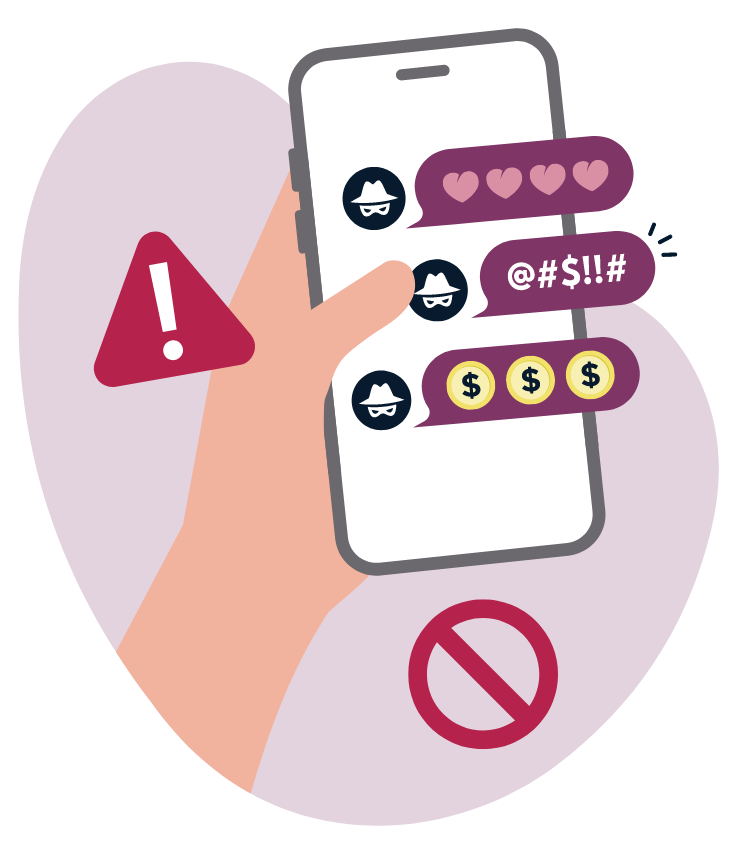
Blackmailers often target people through online dating sites, social media, messaging services and gaming apps.

They commonly pretend to be an attractive person looking for sex, then trick you into sending nudes or sexual images or videos, or record you during a live chat with them.

Once they have an intimate image or video of you, they threaten to share it with your family, friends or co-workers unless you give them what they want.

These are things to look out for:

  • Something does not add up. Their online profile doesn’t match what you see and hear when you talk or chat with them.
  • It moves quickly. They express strong emotions for you almost straight away, and quickly tempt you across to a more private channel, suggesting you get nude or sexual in a video call.
  • They make excuses. They say their webcam is not working and instead they send a nude photo which they claim is of them.
  • They pressure you. They keep asking you to be sexual and to send nudes with your face in the shot.
  • They use ‘bombing’ as a tactic to make it look like they are a mutual friend. They try to friend or follow as many people from your school, sports team, university or community to make you believe they are a ‘real’ person.

Remember, it’s always OK to say no to sending nudes or getting sexual online.

How you can be blackmailed

Blackmailers use different tactics to build trust and pressure people into doing what they want. It can feel confusing in the moment, especially when they move quickly and rely on panic and embarrassment.

They pretend to be someone they’re not, so they can scam you. Often they send a direct message with a ‘sexy pic’ they claim is of them and then ask you to send a naked selfie, or record you getting sexual online.

They threaten to share the image or video with your family, friends or co-workers if you don’t pay them or send more. Usually they ask you to transfer money, or send them cryptocurrency, gift cards or online game credits.

They falsely claim they have ‘found’ intimate images or videos of you saved on your device or in your account. This person might even use one of your current or former passwords or personal details like your birthdate or address to make you believe it’s true.

Then they threaten to share the image or video they claim to have found, unless you pay up.

Usually it’s a scam to get money and they don’t really have access to your device or account.

They use digital technology like artificial intelligence (AI) to ‘nudify’ an image (make you look naked) or do a face swap to create a deepfake.

The blackmailer then tries to use these manipulated photos or videos to scare you into paying money or sending real nudes or sexual videos.

They trick you into thinking you’re in a close relationship, so you feel OK about sending nudes or getting sexual online.

They then say they will make the images or videos public, or hurt you or someone you care about, unless you send more nudes or get sexual with them on camera. Grooming usually refers to an older person forming a relationship with someone under 18, and a predator who does this is often called a ‘paedophile.’

Any sexual activity between a child and an adult is child sexual abuse, including sextortion. Sexual activity may be sexual intercourse, sexual touching or sexual acts that happen in person or online. It may involve coercion, threats, force or implied force. Find out more about child sexual abuse online.

Threatening to share an intimate image or video of someone without their consent can also be a tactic used to control someone close, such as a partner or former partner.

Instead of demanding money or more intimate content, the person tells you that you have to do something (such as staying in a relationship with them) or stop doing something (such as going out with friends). This is called coercive control.

Catfishing, scamming, grooming or blackmailing someone is a crime. Don’t believe the blackmailer if they say they will delete the intimate image or video. If you give them what they want they will just keep asking for more. 

What should I do if I’m being blackmailed?

If someone is threatening you, don’t pay or send more money, gift cards, cryptocurrency, images or videos.

You don’t have to deal with this alone. Reach out to someone you trust or contact a confidential counselling and support service.

1. Collect evidence

Save a record of:

  • all contact from the blackmailer, particularly their demands and threats
  • how they contacted you – for example, the Facebook URL (web address) where the blackmailer sent you a threat or their usernames on Snapchat, Instagram and any other online platforms
  • when they contacted you, including dates and times
  • details about the blackmailer – for example, their bank account or phone number
  • any reports you have made about the issue to any online platforms or to police. 

Taking screenshots or screen recordings, or photos of your screen with another device, is a quick and easy way to collect evidence. Include the threatening messages and blackmailer’s profile. Don’t send your images or videos to any other services.

Find out how to collect evidence, including how to take screenshots on a Mac, Windows PC, Apple devices or Android devices.


2. Report sexual extortion


3. Stop further contact, tighten security and prevent sharing

  • After you have collected evidence, use in-app functions or your device settings to block the blackmailer and ask your friends to do the same.
  • You can also temporarily deactivate your accounts to prevent the blackmailer harassing you (but don’t delete the accounts, as you may lose evidence that way).
  • Review the privacy and security settings of your accounts to limit who can contact you. If you’ve been scammed, change the passwords for your social media and other online accounts. For more information about how to adjust settings on different apps, games, websites and online platforms and services, see The eSafety Guide.
  • If someone claims to have hacked or accessed any of your accounts, find out how to protect your personally identifiable information.

Prevent the image or video being shared

You can block your intimate image or video from being uploaded to specific platforms. You need to have a copy of the image or video, but you don’t need to send it to the platform – they will create a digital ‘fingerprint’ (or ‘hash’) instead.

If you’re under 18, you can use takeitdown.ncmec.org – a free online tool that prevents your image or video being shared on platforms such as FacebookInstagramTikTokYuboOnlyFans and Pornhub.

If you’re 18 or older, you can use StopNCII.org – a free online tool that prevents your image or video being shared on platforms such as FacebookInstagramTikTokBumbleOnlyFans and Reddit.

4. Get more help

What you’re going through is not easy. Even when it’s over you may need more support. 

What if I've already paid the blackmailer?

If you transferred money from a bank account, contact your bank to see if they can help.

If you have paid by a money transfer, you may be able to cancel it if you act quickly.

These links provide information on how to cancel money transfers for international sites commonly used by blackmailers. 

More information