

Family tech agreements

It takes a whole family to be safe online. A family tech agreement is a practical, flexible tool that helps you guide your child, build trust and support positive online experiences.
A family tech agreement is a simple, collaborative way to set shared expectations for how your family uses devices and goes online. It’s less about rules or signing a contract – it’s about building a foundation to support open conversations and habits that help everyone in the family stay safer online.
Creating a family tech agreement together also helps children, including teens, develop digital literacy – the practical, social and emotional skills they need to navigate the online world safely and confidently.
On this page:
Why create a family tech agreement?
Creating an agreement together with your kids can:
- help children understand boundaries and feel confident making safer choices online
- reduce conflict, because everyone knows what actions and behaviours are expected of them
- build trust, so children know they can come to you for help if something goes wrong or they’re unsure about a situation
- support positive experiences online by helping children build digital literacy and learn what good digital citizenship looks like
- encourage parents and carers to model healthy technology use and familiarise themselves with safety tools and settings.
Family tech agreements often work best when parents listen as much as they guide and when children feel their views are heard. They should be tailored to your child’s age, developmental stage and individual needs – and to your family’s values and routines. As children grow and their online lives change, your agreement can grow with them.
Tips for creating a tech agreement
Every family is different, but these principles can help guide the process:
- Involve everyone. Creating the agreement together encourages buy-in and makes expectations feel fair and achievable.
- Create a safe space to talk. Choose a time and place when your child feels comfortable and show that you’re genuinely interested and open to listening without judgement.
- Tailor the conversation. Talk with each child in a way that suits their age, maturity and needs. Ask questions to check what they understand, uncover misconceptions and find common ground.
- Explore what your child enjoys online. Watch or play together to understand their online interests and guide them towards content that suits their age and stage of development.
- Keep it relevant. Focus on what matters most for your family right now – you don’t need to cover everything at once.
- Model the behaviour you expect. Children learn a lot from how adults use technology – this includes being open about online challenges you face and any changes you make to address them.
- Revisit it regularly. Review and update your agreement as your child gets older, gains more independence or starts using new apps and devices.
- Be supportive, no matter what. Acknowledge and respect their feelings and remind them you’re always there for them.
- Share it with other carers. Where possible, talk about your agreement with grandparents, babysitters or other carers so your child gets consistent messages.
Most family tech agreements touch on areas like device use, online behaviour, privacy, balancing time online, and asking for help if something doesn’t feel right. You can go deeper into any of these topics in the ‘Want more support and advice?’ section at the bottom of this page.
Agreements for your child’s age and stage
We've created downloadable tech agreements for different age groups. Each one covers important online safety topics and includes example agreement statements to guide you, plus a printable template with space to add your own family preferences.
You know your child best – choose an agreement that matches their developmental stage and individual needs, not just their age. If you’re caring for more than one child, it can be helpful to acknowledge that expectations may look different for each of them.
Screen reader users: Select a button below to change content below it. You can skip to the expanded section directly by skipping to the heading.Early habits and routines
For very young children, technology use is best shared with an adult and built around everyday routines. At this age, children are starting to recognise patterns and simple rules, which makes it a good time to introduce basic expectations about devices.
Creating a family tech agreement for under 5s can help you:
- model positive behaviour around screen use in your home
- introduce ideas like asking before using a device and using devices in shared spaces
- build early self regulation and kind, safe habits in a fun, age appropriate way.
Agreements for this age are designed to be visual and playful, supporting conversation rather than formal rules. We have developed this template in collaboration with ABC Kids. As your child grows, it’s a good idea to revisit and adapt the agreement together.
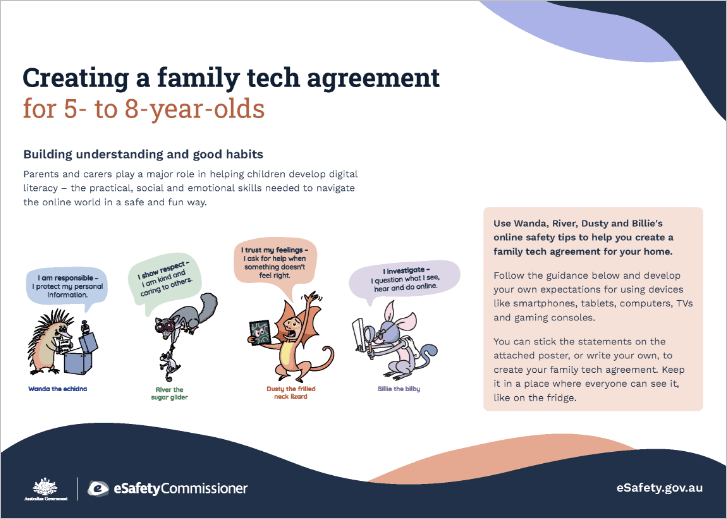
Building understanding and good habits
Children aged 5 to 8 are becoming more independent and curious about the online world, while still relying heavily on adult guidance. They are developing a stronger understanding of rules, fairness and responsibility.
A family tech agreement at this age can:
- support children to build the skills and habits they need to use technology safely and confidently
- promote kindness and respectful behaviour when using devices and interacting online and help introduce concepts like consent
- encourage children to ask questions about what they come across online and support smoother, safer technology use as they move through primary school.
Creating and displaying an agreement together reinforces that online safety is a shared responsibility for the whole family and reminds children to ask for help if they need it.
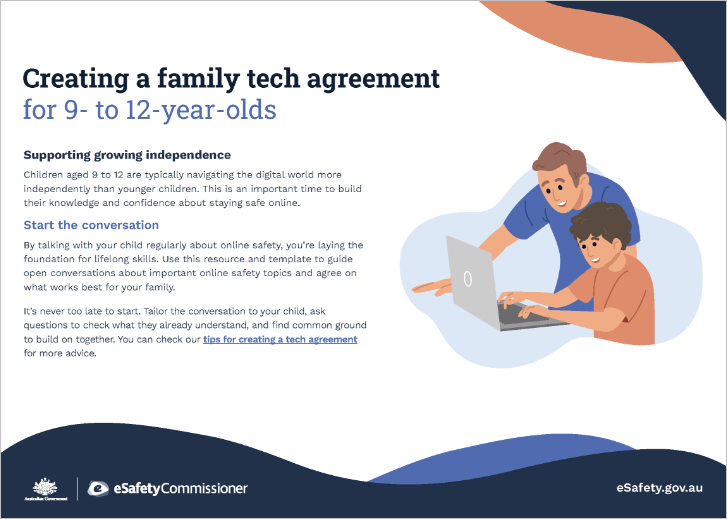
Supporting growing independence
Between 9 and 12 years, many children spend more time online, start playing a bigger role in decision-making, and are increasingly influenced by peers and content creators. This is an important stage for building skills, confidence and trust around online safety. Children at this age vary widely in their digital experience and maturity – some have their own devices, others are just starting out – so flexibility is key.
A family tech agreement for this age group helps:
- keep conversations open, supportive and ongoing to build trust as children gain more independence
- support critical thinking and careful decision making about devices, apps, gaming platforms and online interactions
- prepare children for the transition to secondary school, including navigating more complex online spaces, apps and social media platforms, and getting ready for access to these as they get older.
By creating the agreement together, you’re helping your child balance the benefits and risks of being online, while reinforcing that they can always come to you for help. The template includes discussion prompts and example agreements to guide these conversations.
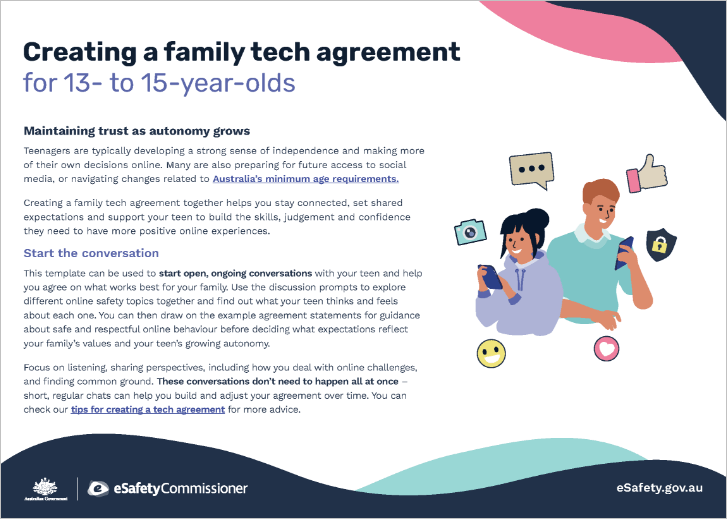
Maintaining trust as autonomy grows
Teenagers often have greater access to devices, online spaces and digital tools, and are spending more time connecting, creating and interacting with others online. While they may appear confident, they still benefit from clear expectations and ongoing support to manage risks and relationships and make informed choices.
A family tech agreement for 13- to 15-year-olds focuses on:
- helping your teen strengthen their digital literacy skills in preparation for access to social media
- promoting shared responsibility, respect and balance as they typically take on more independence
- keeping communication open as teens navigate online relationships, algorithm-driven content and social pressures
- developing their help seeking and more independent problem-solving skills
- encouraging teens to reflect on their online experiences, habits and choices and build confidence in making safer decisions.
At this stage, an agreement works best as a living document that is reviewed together and evolves with your teen’s increasing independence, responsibilities and online interactions.

Want more support and advice?
A family tech agreement is just one part of supporting your child to have safer, more positive online experiences. If you’d like more guidance, eSafety has practical, evidence-based advice on a wide range of online safety topics.
You might find it helpful to explore these pages:
- Screen time – tips for finding a healthy balance that supports sleep, wellbeing and offline activities.
- Parental controls and settings – tools you can use to help manage content, privacy and in app purchases.
- Are they old enough? – guidance to help you decide when your child may be ready for certain apps, games or devices.
- Privacy and personal information – how to help children understand what to share, and what to keep private.
You don’t need to cover everything at once. Start with what feels most relevant for your family right now. You can come back to these resources as your child grows and their online world changes.