

Supporting children's safety online – resources

Downloadable resources for community organisations, services and practices to identify and respond comprehensively to online risks for the children and families they support.
There are also five case studies examining a range of scenarios in which children with disabilities may experience harm online. Each case study has reflection questions that professionals can use to examine how they would support families in similar situations, as well as links to supporting resources for professionals and parents and carers.
On this page:
What is contextual safeguarding?
Contextual safeguarding is an approach to protecting children from harm occurring outside the home – such as in schools, communities, employment, online and from peers – where parents and carers may have limited control. It helps people who work with children to develop a greater understanding about the lives and experiences of children, to support the prevention of serious harms including child sexual abuse online.
Contextual safeguarding places the child at the centre, recognising that their safety and wellbeing is influenced by the environments and relationships around them, including online. It shifts the focus from considering only individual or family vulnerabilities toward assessing and intervening in other environments and situations where abuse may also happen.
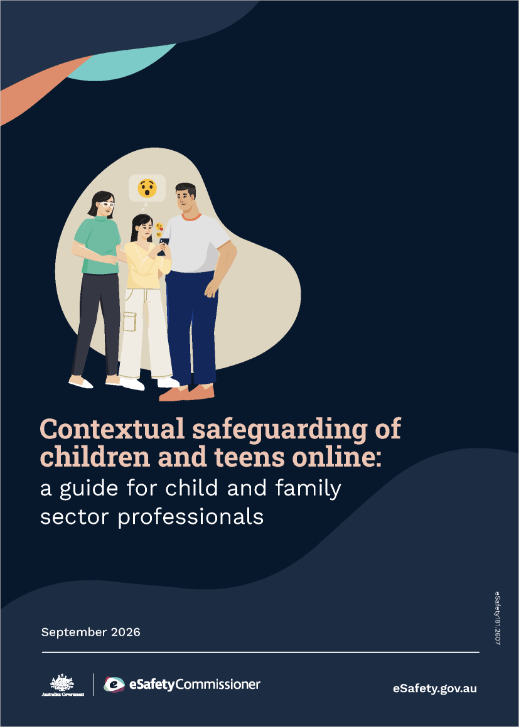
Contextual safeguarding online guide
The guide is designed to complement existing safeguarding policies and procedures in your organisation, service or practice.
It includes key actions for ensuring the online lives of younger children and teenagers are fully considered when safeguarding against the risks and issues they may face. You might use this guide in initial assessment meetings, during regular check-ins, or as part of children, youth or family events. The guide can be used in staff development activities, and to inform online policies and procedures.
Download guide
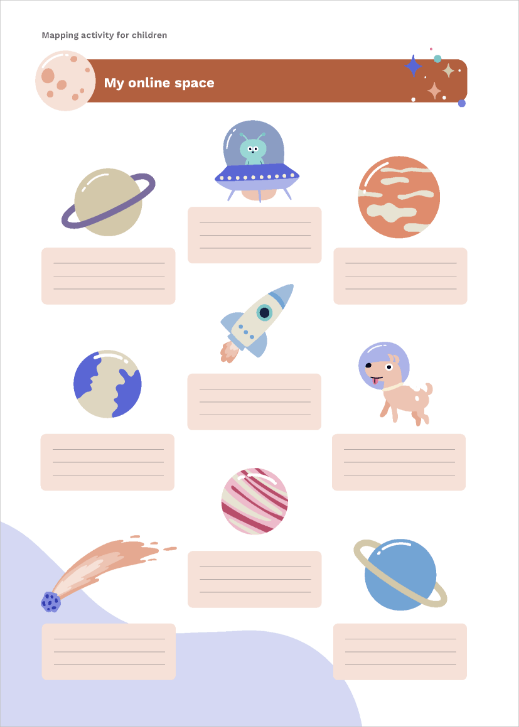
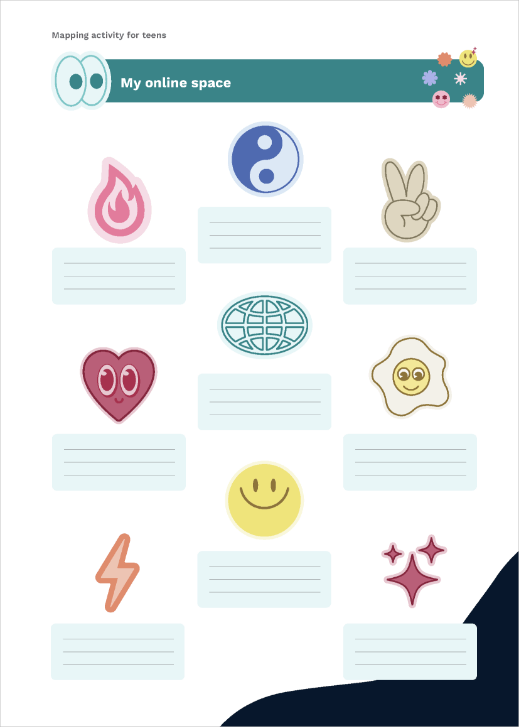
Mapping activities
Use the mapping activity templates to talk about platforms, apps, websites, forums and other online spaces that children regularly use or visit. This includes AI-powered platforms such as companions, chatbots and image generators.
Once the online environment is mapped, children can indicate the spaces where they feel safe and where they may feel less safe at times. (The activities can also be found in the Contextual safeguarding online guide.)
Download mapping activities
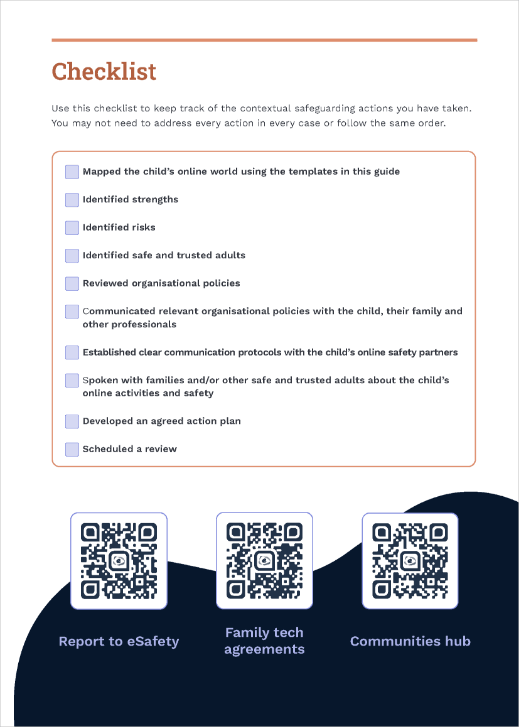
Checklist of actions
Use this checklist to keep track of the contextual safeguarding actions you have taken. You may not need to address every action in every case or follow the same order. (The checklist is in the Contextual safeguarding online guide.)
Download checklist
5 case studies: understanding the online harm experiences of children with disability
About the case studies
The case studies are based on research and insights from services and organisations that eSafety works with. They describe:
- the circumstances in which harm occurred
- the impact on the child
- the protective actions taken by the safe and trusted adults in their lives.
Case studies are an important tool for both families and professionals, as they can help you understand the online experiences of children, including those with disabilities through real-world dynamics and perspectives. They cover a range of contexts, including:
- in the family home and out of home care
- on gaming, community and messaging platforms
- across a range of ages and developmental stages.
Each case study lists the caring adults who may wish to refer to it, including families, allied health professionals, counsellors, disability support workers, educators (in early childhood settings and schools), out of home care workers and youth workers.
There are reflection questions that professionals can use to critically review how they would support families in similar situations as well as links to selected supporting resources for professionals as well as parents and carers.
Families can use these case studies to reflect on the online safety strategies used in their homes, and consider what risks their children might face.
Professionals can use these case studies as a discussion prompt with families to talk about what they might do in similar situations, and open discussions about how they approach online safety together.
If families are worried online harm might already be occurring, these case studies can help support decision-making in high-pressure or complex situations. They can be used to think critically, test solutions and problem-solve together.
Organisations, services and practices can also use these case studies in staff development activities and to inform policies and procedures. People who work with children can also use the case studies individually or as a team, to reflect on their own practice or client needs. Responses to online harm should seek to minimise shame and support recovery.
Case studies
The five case studies in the accordions on this page demonstrate a range of scenarios in which children with disabilities may experience harm online. They can help users understand the online experiences of children, including those with disabilities, through real-world interactions. They include questions for reflection and resources.
Click or tap on the + to expand.
1. Establishing online safety routines with non-verbal children
This case study may be useful for families, allied health professionals, disability support workers, educators in early childhood and disability contexts.
Key points
- Children often benefit from repetition and routine when learning, for example about online safety.
- Non-verbal children can be supported to communicate about online safety issues using symbols and gestures.
- Modelling behaviours, such as asking before taking photos, is important to children’s understanding of consent.
Sophie is 7 years old and mostly non-verbal. She communicates using a combination of gestures, facial expressions and a tablet-based communication app [Augmentative and Alternative Communication (AAC)]. Sophie enjoys playing online games on the family tablet, especially games with predictable routines and familiar characters. When something unexpected happens, she can become overwhelmed and may withdraw or repeat movements rather than use her communication method to tell her mum what is upsetting her.
Sophie’s mum understands that Sophie needs consistent, concrete teaching to build online safety skills.
Together, they practise using buttons that say ‘Stop,’ ‘No photo,’ ’Help,’ and ‘Tell Mum,’ so Sophie can use them if she experiences unsafe contact. Her mum also models consent in everyday situations, such as asking before taking photos or starting video calls. She knows that Sophie learns best through repetition and routine.
Since Sophie began going online, her mum has had short, regular conversations about bodies, feelings and online safety using visuals and modelling through her own online behaviour. She uses simple, consistent phrases such as, ‘You decide who is allowed to touch you and when,’ and ‘No one should ask to see your private parts on a camera, video or in a photo,’.
She also makes sure key safety words and phrases are programmed into Sophie’s communication app.
One afternoon, Sophie suddenly stops playing her game and leaves the room, holding the tablet tightly. She does not respond when her mum speaks to her but begins to rock and points to her communication app. Her mum sits beside her and waits.
With time, Sophie selects symbols showing ‘scared’ and ‘tablet,’ then points back to the screen.
To learn more, her mum uses simple yes and no questions such as:
- ‘Did someone ask for a photo?’
- ’Did they ask you to go somewhere private?’
- ’Did they tell you to keep it a secret?’
She learns that another player asked Sophie to move into a private chat and requested a photo of her without clothes.
Her mum stays calm. She reassures Sophie that she did the right thing by telling her. She explains adults and older children are never allowed to ask kids for
- pictures of them without clothes
- pictures of the areas of their bodies they know to be private
- secrecy and to move a private chat.
Together, they take a screenshot of the message. They use the game’s reporting tools to report the user and then block the account.
Later, they revisit their online safety plan using visuals and simple steps. They practise what Sophie can do if anything similar happens again, including stopping what she is doing and telling or showing a safe and trusted adult about what’s happened.
Sophie’s mum knows these conversations need to happen early and often. By repeating clear safety rules and practising them through supported communication and visuals, she is helping Sophie build the protective skills she needs to be safer online.
Reflection questions for professionals
- What advice or resources might help the family with online safety planning for the future?
- Are there additional online safety approaches the family could add to their safety plan?
Resources for parents and carers
2. Build the skills of teenagers and younger children to deal with encountering online sexual content
This case study may be useful for families of teenagers, younger children and school-based workers such as counsellors.
Key points
- Some children including teens may struggle to recognise when online harm is happening, even if they feel uncomfortable.
- Children may feel pressured to accept and even participate in the harmful behaviours of peers, such as sharing sexual content in group chats.
- It’s important to teach children that consent matters: no one should send them sexual content without their consent (and they should not send it to others without consent).
Omar is 16 years old and uses messaging apps to stay connected with friends from school but often finds online interactions confusing. Omar can struggle to interpret tone and intent in messages. For example, he may not recognise when someone is pressuring him to respond, making inappropriate jokes, or that suggestions ‘everyone else is doing it’ are probably an exaggeration.
Omar’s parents understand that Omar’s growing independence needs to be balanced with ongoing support. Some parental controls they have used with Omar on his devices have been reduced over time, but they check-in regularly on these and talk about the benefits of using them.
They’ve also looked together at what consent means online.
Omar knows these things.
- No one should send a child sexual content, including their peers.
- He does not have to reply to messages that make him feel unsafe or uncomfortable.
- Feeling unsafe, uncomfortable, unsure or pressured are signs to pause and check with a safe and trusted adult.
Omar’s parents also remind him that if he experiences these signs, he can step away and ask for help.
One evening, Omar becomes quiet and withdrawn while scrolling on his phone. His parents notice and gently ask how he is feeling.
Omar hesitates before explaining that pornographic videos and explicit images of adults have been shared in a group chat. He feels uncomfortable and unsure what to do and worries that leaving the group will make him stand out or be teased.
His parents listen without judgement and reassure Omar that he is not in trouble.
They explain that it is not OK to send sexual content without consent, even among friends. They also remind Omar that seeing sexual content online is not his fault.
Together, they review the group chat settings, mute notifications, and look at how to report the content to the platform as it is against the terms of service to share explicit material. They explain what reporting means and reassure Omar that he will not be in trouble for speaking up.
They help Omar unpack what has happened, asking questions like,
- ‘What made you feel uncomfortable?’
- ‘Did it seem like they were pressuring you?’
- They practise simple responses Omar could use, such as,
- ‘I’m not OK with that.’
- ‘Please stop sending that.’
They also talk about the behaviour itself and things Omar can say if his friends tease or bully him for reporting the content like, ‘I don’t want to see that,’ or ‘I just want to talk about something else.’ They remind him that if the behaviour continues, they can decide together whether to report it or leave the group.
Over the following weeks, they regularly ask Omar how things are going in the group chat.
By combining age-appropriate controls with open discussion and clear guidance, Omar has the skills to build confidence to deal with sexual content online more safely and to seek help when something does not feel right.
Reflection questions for professionals
- What advice would you give the family if the harmful behaviour escalates, for example if more sexual content gets sent or Omar experiences cyberbullying?
- What resources can Omar’s family use to help him understand and process what he has seen?
Resources for parents and carers
3. Recognising signs of sexual grooming in neurodivergent children
This case study may be useful for out-of-home care and youth workers.
Key points
- Children and young people who have experienced trauma may find it easier to connect online than in person and value those connections deeply.
- When adults sexually ‘groom’ children, it often involves escalating requests that include secrecy, sharing of sexual photos or videos, and even meeting in person. This can occur quickly or over time.
- It’s important to keep a close eye on the behaviour of under-18s in care and check in with them if they seem to be acting out of character or distressed.
Mia is 17 years old and living in out-of-home care. She has experienced trauma and has a strong need for connection and belonging. Mia often finds relationships difficult to navigate in person. Online spaces sometimes make it feel easier for her to connect with others.
Mia spends a lot of time on social media platforms such as TikTok and Snapchat. One day she posted a video selfie. Shortly after, someone commented on her post.
‘Your video came up on my feed. It’s actually really good.’
The comment seemed normal. Mia replied, and the conversation moved into private messages. The person told Mia he was a teenager and said they had similar interests. Over the next few days, they messaged regularly. Mia’s sense of loyalty and attachment to him grew. Soon the person began encouraging secrecy.
‘You’re easy to talk to. I feel like I can be myself with you.’ But other people wouldn’t understand our friendship. It’s better if we just keep this between us.’
This kind of attention made Mia feel special. The person began messaging her more frequently and wanting to know what she was doing throughout the day. They asked questions like:
‘Are you home now? What are you up to tonight?’
Over time the conversations became more personal. The person eventually revealed he was older, but reassured Mia that their connection was still meaningful.
‘You’re mature for your age. Age doesn’t really matter when you connect like we do.’
The person then began sending Mia small amounts of money online so she could buy things like eyelashes and nails.
‘If you want, I can send you some money for lashes. It’s not a big deal.’
Over time, the person began asking Mia for photos.
‘Can you send me a photo of you right now?’
Later the requests became more personal and sexual.
‘If you trust me, you can send me a private photo. I won’t show anyone.’
Believing she was in a genuine relationship, Mia sent the picture.
Around this time Mia’s carers began noticing changes in her behaviour. She spent long periods alone in her room on her phone, became secretive about who she was talking to, and seemed more emotionally unsettled.
These kinds of changes can be early warning signs that someone may be experiencing unsafe contact online. It’s important to act on these concerns, starting with having a non-judgemental, calm conversation.
One of Mia’s carers gently checked in with her to ask if she was OK.
‘Hey, you’ve been pretty glued to your phone the last few nights. Someone definitely has your attention; those thumbs haven’t stopped tapping.’
They chat for a while about who Mia is chatting to and if they’re treating her okay. Mia’s carer is concerned about the offers to buy gifts and resolves to keep a closer eye on her for the next little while and check in with her about what’s happening online.
A few days later, Mia unexpectedly left the house one evening. Her carers recognised this was out of character and acted quickly to locate her.
Mia tells them later that the person she had been talking to online asked to meet up in person. She agreed to meeting at the local shopping centre as it was a public space. However, when the person asked to go somewhere private, she was worried. She left him and found the centre’s security staff, who called Mia’s carers and waited with her until they arrived. Mia’s carers told her she made the right decision to meet in public and get help when the person asked to go somewhere else.
Mia’s carers reported the incident and photo sharing to local police and the Australian Centre to Counter Child Exploitation (ACCCE).
Reflection questions for professionals
- How would you have approached the situation if you were one of Mia’s carers? What questions would you have asked her?
- What support would you provide or recommend for Mia following this incident?
Resources for carers and parents
4. How online child sexual abuse can occur for neurodivergent children
This case study may be useful for families.
Key points
- Familiar characters and settings, for example in online games, may make neurodivergent children feel like they are safe in unsafe situations.
- Children may struggle to express when they are worried or confused, so it’s important to check in with them regularly, even if they say everything is OK.
- Children benefit from clear, literal instructions. However, they may sometimes follow instructions from unsafe people because they feel like they will be in trouble if they don’t. It’s important to supervise children’s online connections and activities to help keep them safe and talk with them about any unusual behaviour.
Noah is a 7-year-old neurodivergent child who enjoys watching YouTube Kids and playing simple online games on a tablet. He loves repetition, routines, and familiar characters. Noah understands rules best when they are clear and literal. He sometimes struggles to explain feelings and may say ‘OK,’ even when he feels confused.
While watching a gaming video, a pop-up message appears asking Noah to ‘join’ a game. The player is using a profile picture with a character he recognises. They use friendly language like:
- ‘I’m your friend.’
- ‘Let’s play together.’
Because the character in the picture looks safe and familiar, Noah assumes the interaction is safe.
Noah joins the game and while playing receives a more messages from the player:
‘You’re really good at this.’
Noah feels happy and proud. The person says:
‘Let’s play in your room and talk – just us.’
The request seems small and not obviously unsafe. Noah follows along because he likes clear instructions and doesn’t want to ‘do the wrong thing.’
The player says:
‘This is our secret game.’
‘Don’t tell your mum or dad - they might stop us playing.’
Noah feels confused. He knows some secrets are allowed (like birthday surprises) and doesn’t yet understand that requests like this are not safe.
The person asks Noah to:
‘Show your body on the camera.’
‘Send a picture to show you’re my friend.’
Noah feels unsure, uncomfortable and worried about not following the direction to send the picture. However, Noah doesn’t know how to describe the feeling or what to do next.
His dad soon notices that Noah:
- suddenly closes the tablet when he comes near
- wants to play online alone in his room more often
- becomes quiet or upset after using the device
- avoids a favourite game.
Using a calm tone, his father says:
‘You’re not in trouble. I’m here to help.’
Rather than asking ‘What happened?’, his father asks:
‘Did someone ask you to keep a secret?’
‘Did something feel yucky or confusing?’
Noah points to the screen and nods.
His father reassures him:
‘You did nothing wrong. Other people are not allowed to ask kids for pictures of their bodies.
I’m proud of you for showing me. You did the right thing.’
Noah’s dad immediately takes screenshots of the messages, blocks the user and closes the game.
He reports the incident through the platform’s reporting system as well as to local police and the Australian Centre to Counter Child Exploitation (ACCCE).
Supervision is essential when children are young. This means knowing what children are doing online, who they’re interacting with and what platforms, apps or games they’re using. It can be helpful to co-create rules for engaging online. For example, ‘No friending or talking to people we don’t know in real life’, is a clear, simple instruction.
Family tech agreements can cover what apps are safe to use and what are not, where devices can be used, not sharing personal information and other safe behaviours. The use of parental controls on devices used by children can also increase online safety. This might include checking privacy settings and location controls.
Reflection questions for professionals
- What are some strategies that Noah and his dad could include in an online safety plan going forward?
- What advice would you give Noah’s dad about supervising Noah’s online activities? How might that advice change as Noah gets older?
Resources for parents and carers
5. How groomers can target neurodivergent young people through their online communities
This case study may be useful for families, allied health professionals, and educators in schools.
Key points
- Adults may groom neurodivergent young people by making them feel validated, seen and understood. This builds trust and loyalty, so the child is less likely to refuse unsafe requests, such as for sexual photos or videos.
- It’s important to create online safety rules and routines with children including teens. Family tech agreements are one method.
- Grooming or other online harms are never the fault of a child.
Ava is 16 years old and loves drawing, anime, and online art communities. She finds face-to-face social interactions overwhelming and sometimes struggles to read intentions and social cues. She masks heavily at school but feels more herself online and wants friends who understand her interests and identity. Her parents allow her to use Discord and Instagram to share art publicly, with basic safety settings for the apps.
One day, Ava receives a comment on an art platform from another user.
They say: ‘Your art is amazing. You’re so talented. Want to chat more? I get what it’s like to be different.’
Ava feels seen and understood. The validation is powerful for her.
The user claims they are also a 16-year-old artist. Over a few weeks, they send daily comments and supportive DMs (direct messages), including asking about Ava’s sensory triggers, school stress, identity, and friendships.
They slowly create emotional trust, saying things to Ava like, ‘I feel closest to you. No one else gets me. I’d be sad if you stopped talking to me.’
Ava begins hiding the chats from her parents because she fears they won’t understand.
Ava’s new contact reveals, ‘Actually… I’m 17. I didn’t want you to think I was too old.’
Then: ‘Our chats are private. Not everyone will understand. Don’t tell anyone. They might try to end our friendship.’
The person starts messaging about:
- romantic feelings and ‘special relationships’
- wanting to show Ava ‘more private art’
- asking if she ‘feels comfortable sharing something too.’
Ava feels pressured, confused, and doesn’t quite understand her emotions. She sends a cropped, non-sexual selfie but feels guilty afterward.
Soon after, the person says, ‘I’ll show you mine if you show me yours. It’s what people do when they’re close.’
Ava freezes, unsure how to respond.
Ava’s dad notices:
- she’s online late at night
- she’s anxious when notifications appear
- she avoids drawing, her favourite activity
- she’s unusually tearful after school
- she hides her phone when adults enter the room.
When he gently asks, ‘Everything OK online?’
Ava says, ‘I don’t know.’
He says reassuringly, ‘You’re not in trouble. I’m here to help you.’
He can tell she doesn’t know how to explain what’s made her feel unsure, so he asks some concrete, non-judgemental questions, like these.
- ‘Has someone been messaging you?’
- ‘Has anyone asked for private photos?’
- ‘Has someone said to keep things a secret?’
Ava nods and shows her dad some of the conversations.
Her father says, ‘You did nothing wrong. Adults can sometimes trick teenagers online. That is not your fault.’
Once Ava has had some quiet time to regulate, he helps her understand ‘grooming’ in literal, logical steps.
- ‘Grooming’ is when someone builds trust with a young person to manipulate or exploit them.
- The person usually hides who they really are.
- They slowly push boundaries.
- Then they introduce inappropriate or sexual content.
- They use pressure, guilt, or threats to keep you silent.
Her dad also makes sure to address Ava’s self-blame directly: ‘You were targeted because you’re kind, creative, and open. It's not because you did anything wrong.’
Together they adjust her digital settings, reducing private messaging and turning off DMs from strangers, enabling parental monitoring and setting joint rules in a family tech agreement.
Reflection questions for professionals
- How could you and Ava’s family help her to find safe and supportive online communities?
- What support would you provide or recommend for Ava following this incident?
Resources for parents and carers
Download quick guides
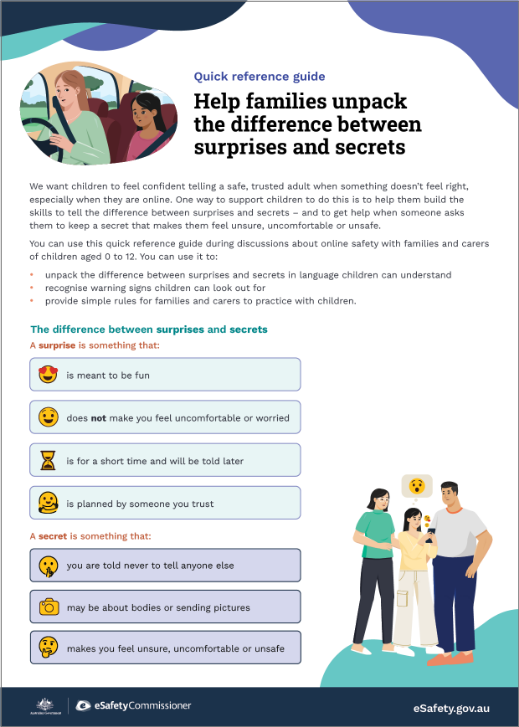
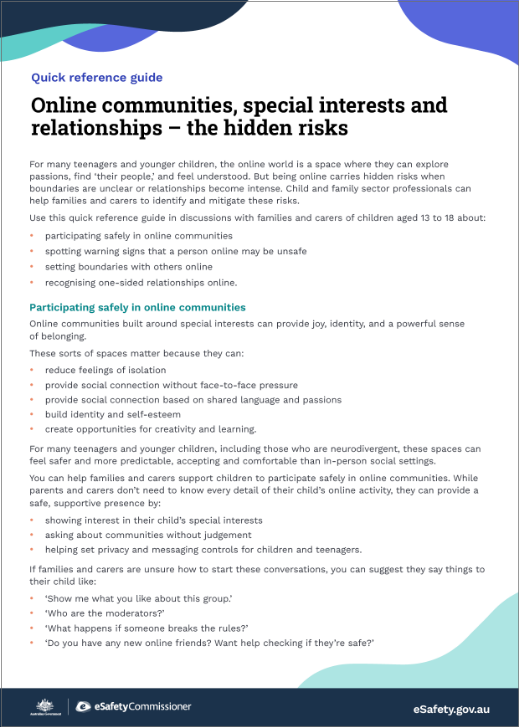
Use these quick reference guides to talk with parents and carers about risks under-18s may face online. You can help them unpack the difference between surprises and secrets and examine the hidden risks in online communities.
Other resources
Explore keeping children safe online in communities for information and advice to prevent and handle online risks and harms, while improving online safety among families in your community. You can also download and print these handouts for parents and carers on unsafe versus safe people and sexual grooming.
We also have various online safety resources available in languages other than English, as well as Easy Read format advice and information.
Support younger children and teenagers who may be experiencing domestic and family violence using this comprehensive tech safety plan to help build a resource that meets their needs.
Last updated: 13/09/2026